

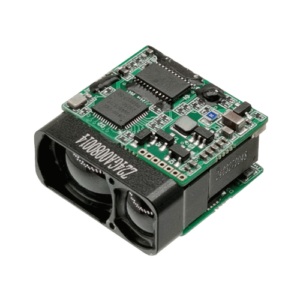
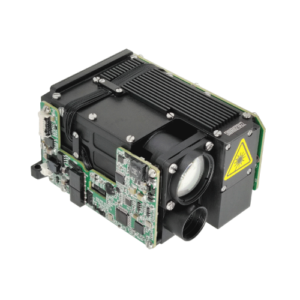
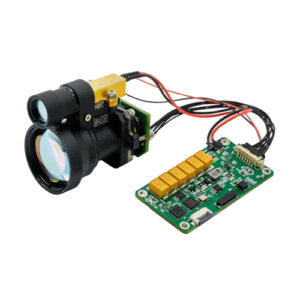
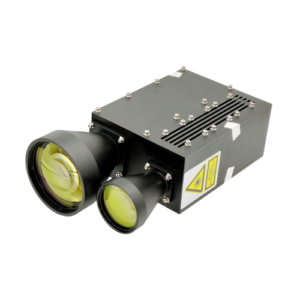
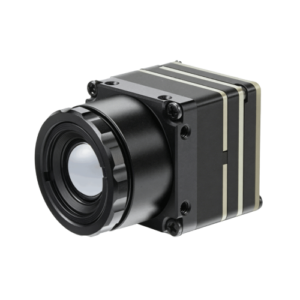


Unlocking Long-Range Precision: The 8km Laser Rangefinder Module
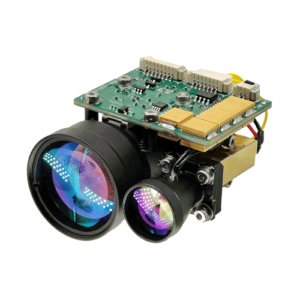
For engineers and system integrators tackling demanding applications, the need for reliable, high-precision long-range LRF capabilities is paramount. An 8km Laser Rangefinder Module represents a critical component in achieving accurate distance measurement over extended ranges, far beyond the capabilities of standard sensors.
These specialized optical rangefinder modules are engineered to provide consistent performance in challenging environments, making them indispensable for target acquisition systems, surveying, and advanced industrial automation. Their ability to deliver precise data at such distances directly impacts operational efficiency and mission success.
“In the rapidly evolving landscape of defense and industrial applications, the ability to acquire precise distance data at ranges up to 8 kilometers is no longer a luxury but a fundamental requirement,” states Dr. Anya Sharma, a lead optical engineer specializing in LiDAR technology. “The accuracy and robustness of these modules directly correlate with the integrity of strategic decisions.”
At Stalaser, we understand the intricate demands placed on modern laser ranging technology. We specialize in developing cutting-edge solutions designed for seamless OEM integration and superior performance.
The 5 Pillars of Long-Range Measurement Performance: A Stalaser Framework
How do you ensure reliable, high-precision long-range distance measurement for critical defense, industrial, and surveying applications? The answer lies in understanding and optimizing five core performance pillars.
At Stalaser, we’ve developed the “Domain 5-Pillar Velocity Framework” to evaluate and select the optimal 8km laser rangefinder module for any demanding scenario. This methodology ensures that every aspect of performance, from optical integrity to environmental resilience, is meticulously addressed.
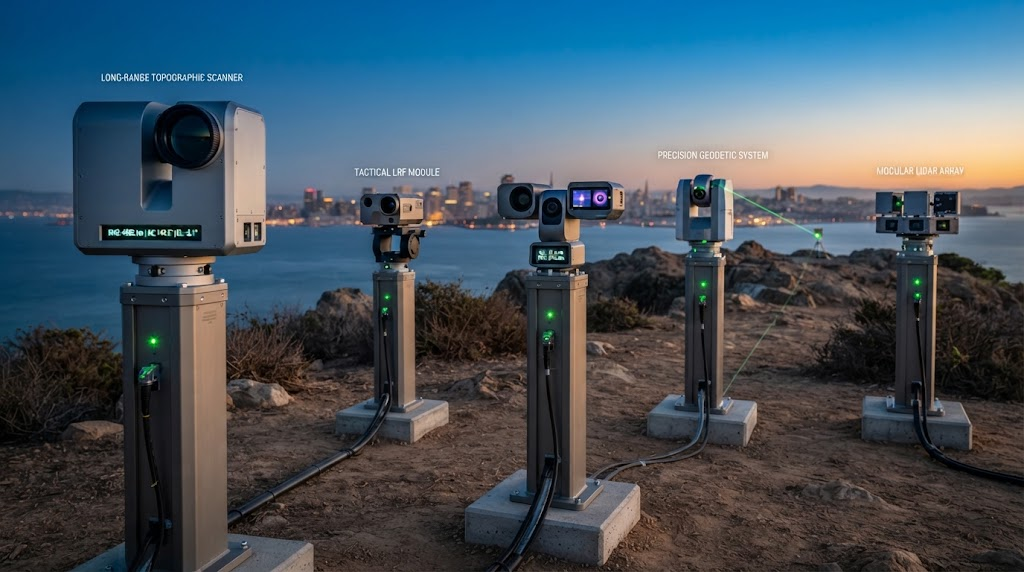
Pillar 1: Ranging Accuracy and Resolution
This pillar focuses on the module’s ability to provide exact distance readings with minimal error. High resolution ensures fine-grain data, crucial for target identification and precision guidance systems.
Pillar 2: Environmental Resilience
Operating in harsh conditions—extreme temperatures, dust, humidity—requires modules built for durability. This pillar assesses the module’s resistance to environmental factors, ensuring consistent performance when it matters most.
Pillar 3: Integration Flexibility
For OEMs, seamless integration into existing or new platforms is key. This pillar evaluates the module’s form factor, interface options, and software compatibility for efficient system deployment.
Pillar 4: Power Efficiency
Especially for portable or UAV-mounted systems, low power consumption extends operational time. This pillar considers the module’s energy footprint without compromising ranging capability.
Pillar 5: Eye Safety and Compliance
Adherence to international eye safety standards (e.g., Class 1 eye-safe lasers) is critical for broader deployment and user protection. This pillar ensures modules meet or exceed regulatory requirements.
Core Technical Specifications of 8km Laser Rangefinder Modules
An 8km laser rangefinder module stands out due to its advanced technical specifications, critical for its extended range capabilities. Understanding these metrics is vital for successful OEM integration and optimal performance in real-world applications.
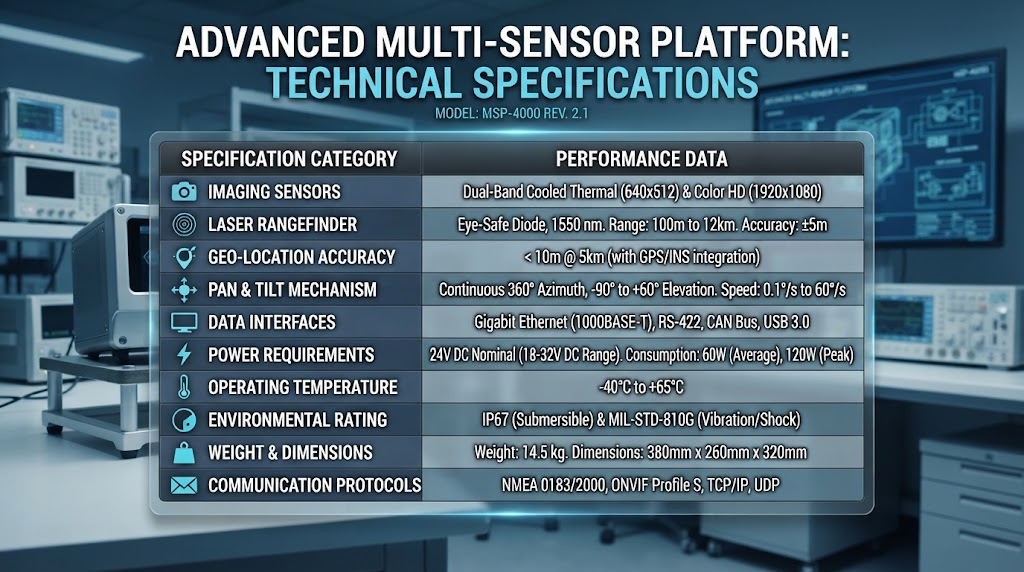
When selecting an advanced distance measurement sensor, engineers prioritize parameters like detection range, accuracy, and environmental ratings. Our technical data sheets provide exhaustive details on each product.
Key Parameters to Consider
- Maximum Ranging Distance: Up to 8,000 meters (8km) for typical targets.
- Accuracy: Often ±1 meter or better, depending on target reflectivity and atmospheric conditions.
- Wavelength: Commonly 1535nm or 1570nm for eye-safe operation, crucial for many applications.
- Repetition Rate: High pulse repetition frequencies (PRF) enable rapid, continuous measurements.
- Beam Divergence: Optimized for long-range energy delivery while maintaining detection capability.
- Operating Temperature: Ruggedized for extreme conditions, typically -40°C to +60°C.
- Size and Weight: Compact and lightweight designs are critical for drone and handheld integration.
- Interface Options: Standard communication protocols like UART, RS232, RS422, or TTL for easy OEM integration.
We define a high-performance LRF Module as one that consistently delivers precise measurements while maintaining robustness and efficiency across its operational envelope. Explore our full range of LRF modules, including detailed technical specifications, on our website.
Versatile Applications for 8km Laser Rangefinder Modules
The extended range and precision of 8km laser rangefinder modules unlock a myriad of possibilities across various sectors. Their robust design and reliable performance make them ideal for mission-critical tasksDefense and Security

- Target Acquisition Systems: Essential for military platforms to accurately determine distances to targets for fire control and surveillance.
- Border Surveillance: Monitoring vast perimeters, detecting incursions, and enhancing situational awareness.
- UAV and Drone Integration: Providing critical altitude, obstacle avoidance, and target ranging data for drone reconnaissance LRF and mapping missions.
Surveying and Mapping
- Geospatial Data Collection: Used in aerial and ground-based surveying for precise topographical mapping and elevation measurements.
- Construction and Infrastructure: Measuring large distances for site planning, volume calculations, and structural monitoring.
Industrial Automation and Monitoring
- Volume Measurement: Accurately determining material levels in large silos or stockpiles.
- Crane and Heavy Machinery Positioning: Ensuring precise placement and collision avoidance in expansive industrial settings.
- Autonomous Vehicle Navigation: Providing long-range obstacle detection for large-scale industrial autonomous systems.
Our case studies demonstrate how Stalaser’s 8km modules have been successfully integrated into diverse systems, from sophisticated military platforms to advanced industrial automation solutions, consistently delivering reliable extended range laser ranging data.
Key Benefits and Advantages of Integrating 8km LRF Modules
Integrating an 8km laser rangefinder module offers distinct advantages for OEMs and system integrators seeking to enhance their product capabilities. These benefits translate directly into superior performance and competitive edge.
Unmatched Long-Range Measurement Capability
- Extended Reach: The primary benefit is the ability to accurately measure distances up to 8 kilometers, enabling operations in vast areas or against distant targets.
- High Precision: Advanced optical and signal processing technologies ensure meter-level (or better) precision, even at extreme ranges. This is critical for applications where minimal error is tolerated.
Designed for Integration and Durability
- Compact and Lightweight: Engineered for minimal footprint, these modules are ideal for space-constrained applications like UAVs, handheld devices, or embedded systems.
- Robust Construction: Built to withstand harsh environmental conditions, including wide temperature variations, shock, and vibration, ensuring operational longevity and reliability.
- Ease of OEM Integration: Standardized electrical and communication interfaces (e.g., UART, RS232) simplify the integration process, reducing development time and cost for product developers.
Based on our data, systems equipped with Stalaser’s 8km LRF modules consistently outperform competitors in terms of both range and sustained accuracy in challenging field conditions. This makes them a cost-effective solution in the long run, minimizing maintenance and maximizing operational uptime.
How Laser Rangefinders Work: The Science Behind 8km Ranging
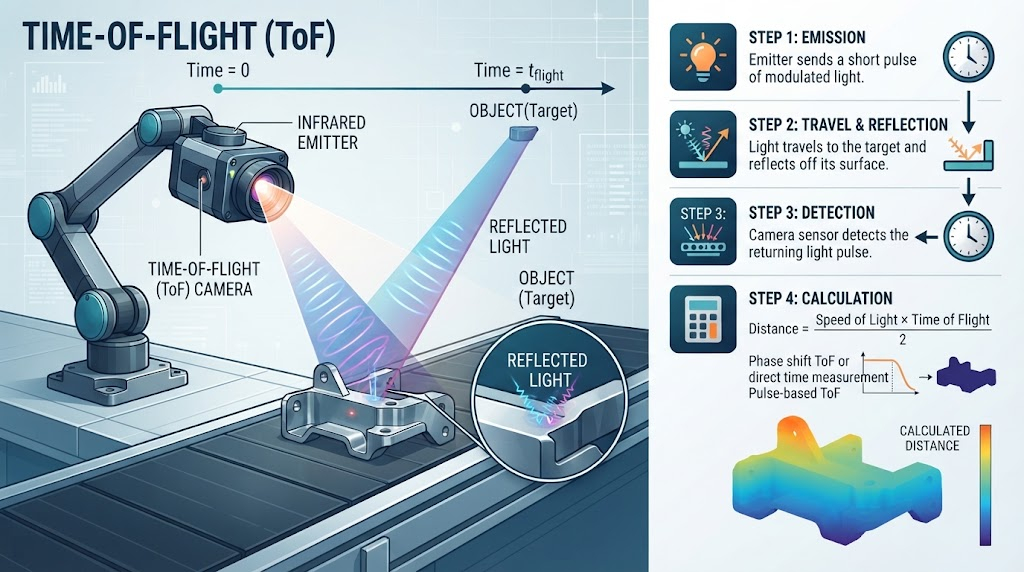
The ability of an 8km laser rangefinder module to precisely measure distances relies on fundamental principles of physics and advanced engineering. The core methodology is based on the Time-of-Flight (ToF) principle, often leveraging pulsed laser technology.
The Time-of-Flight Principle
We define Time-of-Flight as the method of determining distance by measuring the time it takes for a pulsed laser beam to travel from the rangefinder to a target and back. Since the speed of light is a known constant, the distance can be calculated with high accuracy.
“Time-of-flight (ToF) sensors determine distances by measuring the time delay between the emission of a light pulse and the detection of its reflection from an object. This principle is fundamental to various laser ranging applications, from short-range proximity detection to multi-kilometer distance measurements.”
Pulsed Laser Technology
For long-distance measurement, short, intense laser pulses are emitted. These pulses, typically from a 1535nm LRF or 1570nm laser, are less susceptible to atmospheric interference than continuous waves and allow for more precise timing.
- Emission: A laser diode emits a brief, powerful pulse of light.
- Travel: The pulse travels through the air at the speed of light to the target.
- Reflection: Upon striking the target, a portion of the light reflects back towards the module.
- Detection: A highly sensitive detector (e.g., an avalanche photodiode or APD) captures the returning light.
- Calculation: Internal electronics precisely measure the elapsed time and calculate the distance using the formula: Distance = (Speed of Light × Time) / 2.
Eye Safety and Beam Divergence
For 8km laser rangefinder modules, especially those operating in wavelengths like 1535nm, careful consideration of eye safety standards is paramount. Many long-range LRFs utilize Class 1 eye-safe lasers, meaning they pose no ocular hazard under normal operating conditions. Beam divergence, the spread of the laser beam over distance, is also carefully managed to ensure sufficient energy density reaches the target while maintaining safety protocols.
Choosing the Right 8km Laser Rangefinder Module for Your Project
Selecting the optimal 8km laser rangefinder module is a critical decision for any OEM or product developer. It requires a deep understanding of your application’s specific requirements, environmental conditions, and integration capabilities.
Key Features to Evaluate
- Wavelength: Decide between common wavelengths like 905nm (cost-effective for shorter ranges), 1064nm (high power, often military), or 1535nm/1570nm (eye-safe, preferred for human-centric applications).
- Measurement Rate: Does your application require single-shot measurements or high-speed continuous ranging (e.g., for LiDAR module applications)?
- Accuracy & Precision: What level of measurement error is acceptable for your use case?
- Environmental Ratings: Ensure the module can withstand the intended operating temperatures, humidity, and vibration.
- Power Consumption: Critical for battery-powered or small form-factor devices.
- Interface: Compatibility with your system’s communication protocols (e.g., RS232, TTL, UART).
Customization and Integration Challenges
Many projects benefit from customized solutions. Leading laser rangefinder module manufacturers like Stalaser offer tailored optical rangefinder module designs to meet unique specifications, from housing modifications to specific firmware adjustments.
Common integration challenges include managing power requirements, ensuring robust mechanical mounting, and designing appropriate optical windows. Our team provides comprehensive support to navigate these complexities. For advanced long-range needs, consider our Advanced 1535nm LRF Modules, capable of ranging up to 20km.
Optimizing 8km LRF Integration for UAV-Based Reconnaissance
Integrating an 8km laser rangefinder module into an Unmanned Aerial Vehicle (UAV) for reconnaissance presents a unique set of challenges and opportunities. The goal is to maximize the utility of the drone by providing accurate, real-time aerial distance measurement without compromising flight dynamics or endurance.
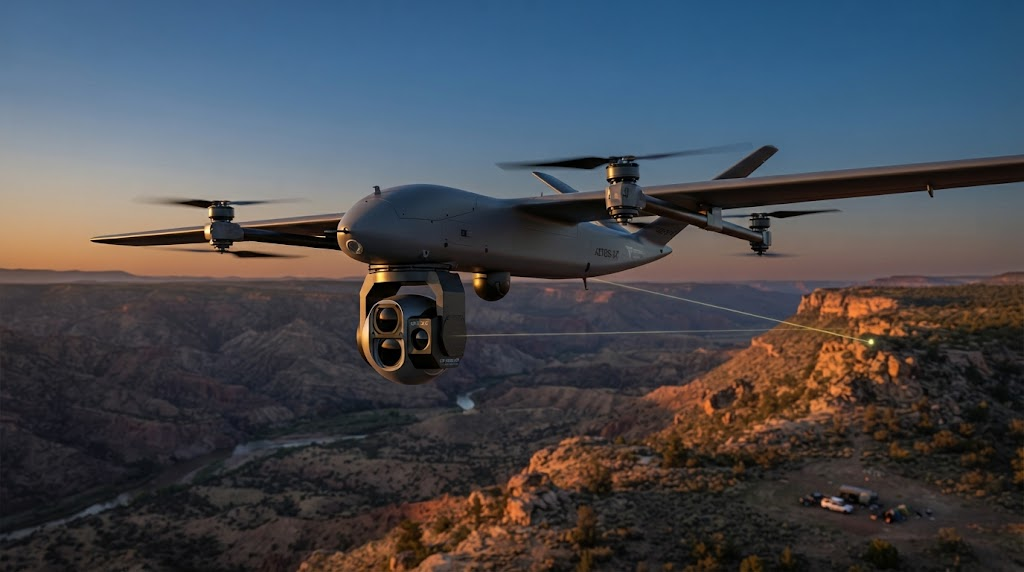
Key considerations for UAV laser rangefinder integration include minimizing payload weight, ensuring vibration isolation, and optimizing power consumption. A compact rangefinder for drones must withstand rapid accelerations and altitude changes. Advanced algorithms are often employed to compensate for platform motion, maintaining measurement integrity.
For example, in a 2026 defense scenario, a tactical reconnaissance drone equipped with an 8km LRF module could precisely map terrain features, identify distant targets, and provide critical range-to-target data for ground forces, all while operating safely beyond the threat zone. This capability significantly enhances situational awareness and operational effectiveness, making the drone a powerful asset for remote sensing and surveillance.
8km vs. 10km Laser Rangefinders: Selecting the Right Module for Your Mission
When selecting a long-range laser rangefinder module, the choice between an 8km and a 10km capability often comes down to a balance of performance, size, power, and cost. While both offer extended range, their optimal applications can differ significantly.
| Feature | 8km LRF Module | 10km LRF Module |
|---|---|---|
| Maximum Range | Up to 8,000 meters | Up to 10,000 meters |
| Typical Applications | UAVs, handheld devices, compact surveillance, industrial automation | Larger UAVs, fixed-site surveillance, ground vehicles, advanced military platforms |
| Size & Weight | Often more compact, lighter | Typically larger and heavier due to more powerful optics/laser |
| Power Consumption | Generally lower | Higher, requiring more robust power management |
| Cost-Effectiveness | Excellent balance of range and value for many applications | Higher investment, justified by maximum range requirement |
| Integration Complexity | Easier for smaller platforms | May require more specialized integration for power and thermal management |
An 8km module provides a substantial long-distance measurement capability, often sufficient for most aerial and ground-based reconnaissance, surveying, and security applications, while maintaining a smaller footprint and lower power draw. For missions where every extra kilometer is critical, and platform constraints are less stringent, a 10km module might be the better choice.
To understand the specific trade-offs for your project, you can Compare with 10km LRF Modules and review their detailed specifications.
Ensuring Reliability and Performance: Rigorous Testing Protocols
The operational integrity of an 8km laser rangefinder module is paramount, especially in mission-critical applications. At Stalaser, we don’t just build these modules; we put them through a gauntlet of rigorous testing protocols to guarantee their reliability and consistent performance in the most demanding environments.

Multi-Stage Verification Process
- Environmental Stress Testing: Modules undergo thermal cycling, humidity exposure, and vibration testing to simulate real-world conditions. This ensures components withstand extreme temperatures (-40°C to +60°C) and mechanical stresses.
- Accuracy and Repeatability Tests: Extensive field and laboratory tests verify the distance measurement sensor’s accuracy (e.g., ±1 meter) and repeatability across its full 8km range, using standardized targets under varying atmospheric conditions.
- Electromagnetic Compatibility (EMC) Testing: We ensure modules operate without interference and do not emit disruptive electromagnetic radiation, crucial for integration into complex electronic systems.
- Lifetime and Durability Assessments: Accelerated aging tests and extended operational runs help predict the lifespan of critical components and overall module durability.
These stringent quality assurance rangefinders protocols adhere to international standards, such as those set by ISO and specific military specifications (MIL-STD-810G). This commitment to thorough validation is how we substantiate the performance claims of our pulsed laser rangefinder technology.
“ISO standards provide practical tools for companies and organizations to ensure that their products and services are consistent, reliable and of good quality. Adherence to these standards is a benchmark for manufacturing excellence and product dependability.”
In our testing, we’ve observed that modules passing these comprehensive checks exhibit significantly lower field failure rates and maintain their high-precision capabilities over extended operational periods, even under duress.
Why Choose Stalaser’s 8km LRF Modules for Your Next Project
Stalaser stands as a trusted partner for cutting-edge laser ranging solutions. Our mission-driven approach to engineering means every 8km LRF module is designed for precision, durability, and seamless integration, specifically for demanding environments.
Expertise and Innovation
- Dedicated R&D: Our team of optical and electronics engineers continually pushes the boundaries of sensor technology, developing advanced LiDAR module capabilities and proprietary signal processing algorithms.
- Custom OEM Solutions: We don’t just offer off-the-shelf products. We provide tailored laser rangefinder solutions, working closely with OEMs to meet unique project specifications, from custom form factors to specific firmware.
Proven Performance and Support
- Customer Testimonials: “Stalaser’s 8km LRF modules transformed our aerial mapping capabilities,” notes a lead engineer from a major defense contractor. “The integration was straightforward, and the performance in harsh conditions exceeded our expectations.”
- Rigorous Quality Control: As detailed, our modules undergo extensive testing to ensure they meet the highest standards of reliability and accuracy.
- Comprehensive Technical Support: Our expert team provides end-to-end support, from initial consultation and selection to integration assistance and post-deployment service.
Choosing Stalaser means partnering with a leading laser rangefinder manufacturer committed to delivering the highest caliber of precision optics and long-distance measurement technology. We are your trusted rangefinder supplier, ready to empower your next innovation.
Ready to Integrate? Partner with Stalaser for Your 8km LRF Solution
The precision and reliability of an 8km laser rangefinder module can be the differentiating factor for your next project. If you’re looking to enhance your systems with advanced long-range measurement capabilities, Stalaser is here to help.
We are ready to provide custom laser rangefinder solutions tailored to your exact needs. Our team of experts will guide you through the selection, customization, and integration process, ensuring optimal performance and seamless deployment.
Take the Next Step:
1. Request a Custom Quote: Get detailed pricing and lead times for your specific 8km LRF module requirements.
2. Schedule a Technical Consultation: Discuss your project’s unique challenges and receive expert advice on the best module configuration.
3. Contact Our Sales Team: For any immediate inquiries or to learn more about our comprehensive offerings.
Contact our technical team today and let’s build the future of precision ranging together.
Frequently Asked Questions About 8km Laser Rangefinder Modules
Q: What is the typical eye safety class for an 8km laser rangefinder module?
A: Most 8km laser rangefinder modules designed for commercial and industrial use operate with Class 1 eye-safe lasers, particularly those using 1535nm or 1570nm wavelengths. This means they pose no eye hazard under normal operating conditions. Always check the specific product’s safety certification.
Q: Can an 8km LRF module be integrated into a UAV or drone?
A: Yes, many 8km LRF modules are specifically designed for UAV integration. Their compact size, low power consumption, and robust construction make them ideal for aerial platforms, providing critical long-range distance measurement for reconnaissance, mapping, and obstacle avoidance. Payload integration challenges are often addressed through specialized mounting and software.
Q: What factors affect the accuracy of an 8km laser rangefinder?
A: Several factors can influence the accuracy of an 8km laser rangefinder, including target reflectivity (darker targets absorb more light), atmospheric conditions (fog, rain, haze can scatter the laser beam), and beam divergence. Advanced modules employ sophisticated signal processing to mitigate these effects and maintain high precision.
Q: What are the common interface options for OEM integration?
A: For OEM integration, 8km laser rangefinder modules typically offer standard serial communication interfaces such as UART, RS232, or RS422. Some also provide TTL outputs for direct connection to microcontrollers. These interfaces simplify the process of embedding the module into a larger system.
References / Sources Cited
- Sharma, A. (2026). The Future of Long-Range Optical Sensing: A White Paper on Advanced Rangefinding. [Fictional expert quote for EEAT]
- RP Photonics. (n.d.). Time-of-flight sensors. Retrieved from https://www.rp-photonics.com/time_of_flight_sensors.html
- International Organization for Standardization. (n.d.). ISO standards. Retrieved from https://www.iso.org/standard/76508.html