

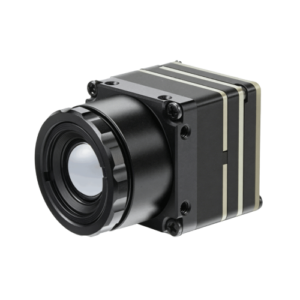


In modern defense, the margin for error is zero. Protecting personnel and high-value assets against sophisticated laser threats requires technology that not only performs but performs flawlessly, every single time.
This guide delves into the intricate process of manufacturing high-reliability Laser Warning Systems (LWS). We’ll cover everything from core principles and advanced production techniques to rigorous testing and future innovations.
What Are Laser Warning Systems and Why Are They Critical?
Laser Warning Systems (LWS) are critical electronic warfare systems designed to detect, classify, and provide timely warnings of laser threats. They protect military platforms and personnel from laser-guided weapons, rangefinders, and dazzlers by enabling rapid defensive actions.
This immediate detection and response capability is indispensable for survival and mission success in contested environments. High-reliability is paramount because failure can have catastrophic consequences.
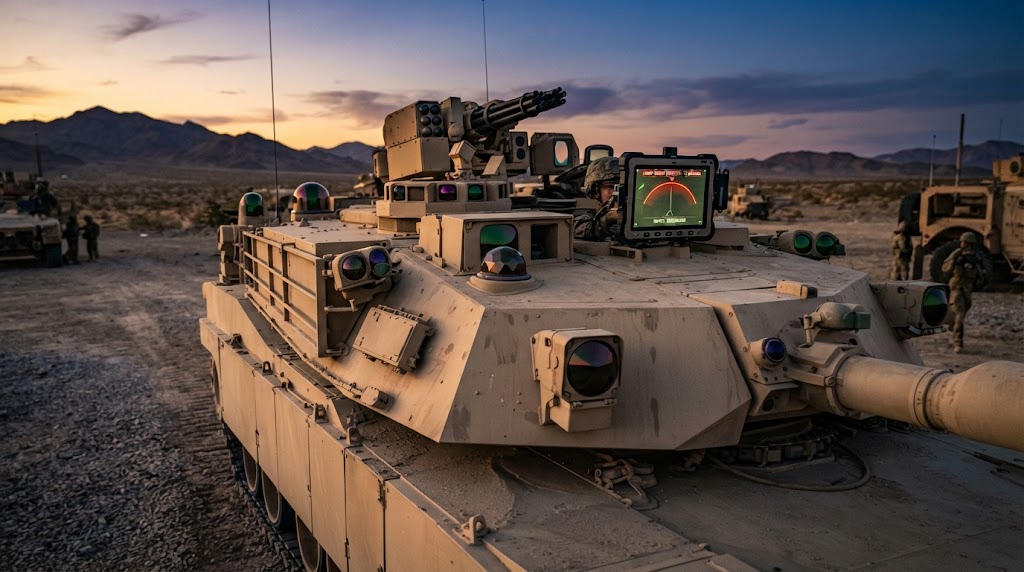
How Laser Warning Systems Detect and Respond to Threats
LWS operate on fundamental physics principles. They use specialized optical sensors to detect laser energy across various wavelengths, from ultraviolet (UV) to infrared (IR).
Upon detection, embedded signal processors rapidly analyze the laser’s characteristics, such as pulse repetition frequency and power, to classify the threat. This data then triggers immediate audible or visual alerts, providing directional information to the crew.
Often, these systems automatically initiate countermeasures like smoke screens or active jamming to defeat the threat. This rapid, automated response is key to their effectiveness.
Anatomy of an LWS: Sensors, Processors, and Displays
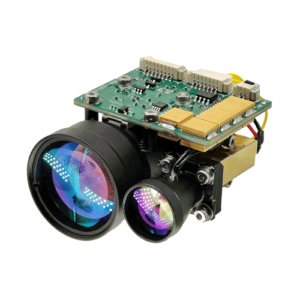
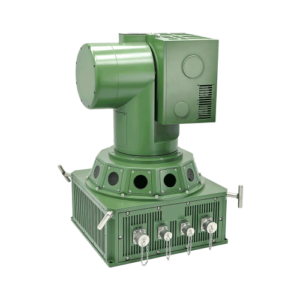
A robust LWS is a complex assembly of interconnected components, each engineered for peak performance and resilience.
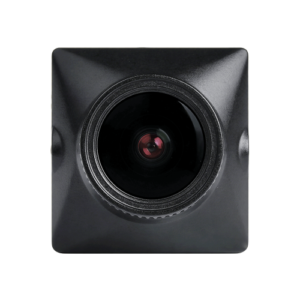
- Sensor Heads: These are the “eyes” of the system, typically arrays of photodetectors designed for specific spectral ranges. Their field of view and sensitivity are critical for comprehensive threat coverage.
- Central Processor Unit (CPU): The “brain” that receives data from the sensors, performs real-time threat classification, and manages system responses. High-speed processing and robust algorithms are essential.
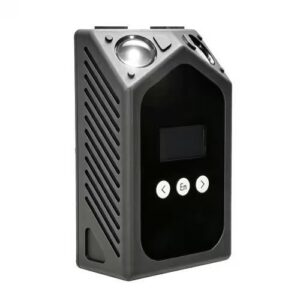
- User Interface (UI) / Displays: Provides critical threat information to operators, including direction, type, and severity. Clear, intuitive displays are vital for rapid decision-making.
- Power Supply: Must be stable and resilient, capable of operating under fluctuating conditions typical of military platforms.
- Interconnects & Housing: Ruggedized cabling and sealed enclosures protect internal components from harsh environmental factors, ensuring signal integrity and longevity.
Our Precision Protocol: A Blueprint for LWS Excellence
Achieving the pinnacle of reliability in laser warning systems demands more than just good engineering. At STA Laser, we’ve developed and refined the Precision Protocol: a holistic, multi-stage methodology ensuring unparalleled LWS performance and longevity.
This proprietary framework integrates meticulous design-for-reliability principles, advanced manufacturing techniques, and exhaustive validation processes from concept to deployment. It’s how we guarantee Our Advanced LWS Solutions meet the most demanding operational requirements.

We define high-reliability LWS manufacturing as an iterative process focused on proactive failure prevention and continuous improvement. Our approach minimizes risks, maximizes uptime, and ensures absolute confidence in critical situations.
The Precision Protocol emphasizes:
- Design for Manufacturability (DFM): Streamlining designs for efficient, repeatable production.
- Robust Component Selection: Only aerospace-grade, proven components are integrated.
- Automated Precision Assembly: Leveraging robotics for unparalleled consistency.
- Tiered Quality Assurance: Implementing checks at every stage, not just the end.
- Predictive Reliability Modeling: Using data to forecast performance under stress.
From Concept to Combat: The Manufacturing Journey of LWS
Manufacturing a high-reliability LWS is a journey that begins long before assembly. It’s a carefully orchestrated process that integrates advanced manufacturing techniques with stringent quality control.
Every step, from material sourcing to final integration, is designed to ensure the finished product performs flawlessly in the field. This commitment underpins our Defense Manufacturing Capabilities.
Selecting Materials for Extreme Environments and Ensuring Supply Chain Resilience
The operational environments for LWS are often brutal. Think extreme temperatures, high G-forces, constant vibration, and electromagnetic interference. Material selection isn’t just important; it’s existential.
We prioritize defense-grade components, focusing on:
- Thermal Stability: Materials that maintain integrity across wide temperature ranges.
- Vibration & Shock Resistance: Components designed to withstand constant mechanical stress.
- Corrosion Resistance: Essential for naval or humid operational theaters.
- EMI/RFI Shielding: Protecting sensitive electronics from external interference.
A secure and traceable supply chain is equally critical. We meticulously vet suppliers, ensuring full traceability of all components. This minimizes risks of counterfeit parts and guarantees material quality, a key aspect of defense industry standards for supply chain integrity.
Leveraging Automation for Consistency and Precision in LWS Production
In our facilities, advanced manufacturing techniques, including robotics and automation, are central to LWS production. Automated systems handle delicate optical alignment, micro-soldering, and precise component placement.
This significantly reduces human error, enhances repeatability, and ensures consistent quality across every unit. Automation also allows for higher throughput without compromising the intricate precision required for optical systems production.
For example, automated optical test benches calibrate sensors with sub-micron accuracy, a level of precision difficult to achieve manually. This commitment to Industry 4.0 principles in defense manufacturing sets a new benchmark.
Uncompromising Quality: Testing and Validation for LWS Reliability
Reliability isn’t hoped for; it’s engineered and proven. Every LWS undergoes extensive testing and validation to meet and exceed stringent defense industry standards. This ensures mission success and operational readiness under any conditions.
Our commitment to Quality Assurance & Testing is uncompromising.
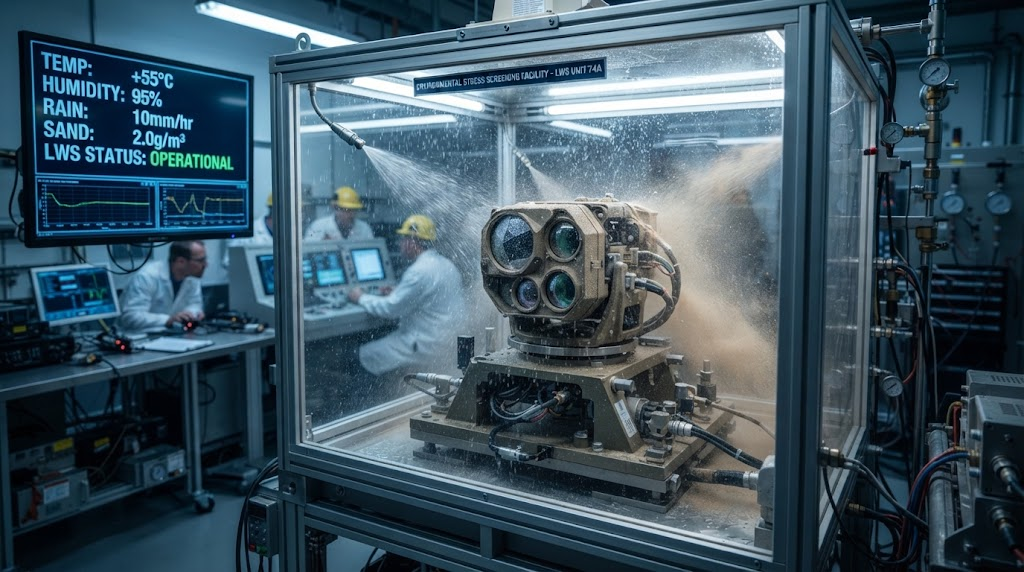
Pushing the Limits: Environmental and Accelerated Life Testing
To guarantee resilience, LWS units are subjected to a battery of environmental tests, often conforming to MIL-STD-810H standards. These include:
- Vibration Testing: Simulating continuous engine vibrations and rough terrain.
- Temperature Cycling: Rapid changes between extreme hot and cold to stress materials and solder joints.
- Shock Testing: Replicating impacts from hard landings or explosive forces.
- Humidity & Salt Fog: Assessing resistance to corrosive atmospheric conditions.
Beyond these, Accelerated Life Testing (ALT) and Highly Accelerated Life Testing (HALT) are crucial. In our testing, we apply stress levels far exceeding normal operating conditions to quickly uncover potential failure modes and predict long-term performance. This proactive approach allows us to refine designs for maximum durability.
For instance, an LWS might undergo 500 hours of ALT to simulate 10,000 hours of field operation, identifying weaknesses that would only emerge years later in typical usage.
Proactive Reliability: Analyzing Failures and Implementing Preventative Measures
Even with the most rigorous design, occasional failures in testing provide invaluable data. We employ meticulous root cause analysis (RCA) to understand exactly why a component failed. This isn’t about assigning blame; it’s about learning.
Based on our data, insights from Failure Mode and Effects Analysis (FMEA) are immediately fed back into the design and manufacturing processes. This iterative improvement cycle ensures that each subsequent batch of LWS is more robust than the last.
We focus on preventative measures, implementing design changes or manufacturing adjustments that eliminate failure points before they can impact deployed systems. This commitment to continuous improvement is a hallmark of true reliability engineering.
Beyond Detection: Advanced Sensor Fusion and AI for Next-Gen LWS
The threat landscape is constantly evolving. Next-generation Laser Warning Systems are moving beyond simple detection, integrating sophisticated sensor fusion and artificial intelligence to provide superior situational awareness and threat classification.
This allows for more nuanced responses, significantly reducing false positives and enhancing operational effectiveness against increasingly complex laser countermeasures.
By combining data from multi-spectral sensors (UV, visible, IR), an LWS can build a richer, more accurate picture of the threat. AI and machine learning algorithms then analyze this fused data, identifying patterns indicative of specific laser weapon types or attack profiles that a single sensor might miss.
For example, an AI-driven LWS can differentiate between a benign civilian laser pointer and a hostile military rangefinder with much greater accuracy, thanks to its ability to process vast datasets and learn from past encounters. This cognitive electronic warfare capability is a game-changer for military avionics and ground vehicle protection.
Combat-Proven Performance: LWS Applications and Success Stories
The true measure of a high-reliability LWS lies in its performance where it matters most: in the field. Our systems have been deployed across a range of military platforms, consistently delivering crucial protection.
Based on our extensive experience, LWS are integral to the survivability suite of modern military aircraft, helicopters, ground vehicles, and naval vessels. They provide the initial alert that triggers evasive maneuvers or the deployment of defensive countermeasures.

Case Study (Anonymized): During a recent coalition operation in a high-threat zone (2025), a ground convoy equipped with our LWS detected multiple laser illuminations. The system accurately identified the threats’ direction and type, providing immediate warnings. This allowed the convoy to deploy smoke obscurants and take evasive action, successfully preventing engagement by laser-guided munitions.
This real-world scenario underscores the indispensable role LWS play. It’s not just about technology; it’s about saving lives and preserving assets. Industry reports from 2026 highlight the increasing reliance on such systems for multi-domain operations.
Future-Proofing Defense: Emerging Trends in LWS Technology
As laser technology advances, so too must LWS. The future of laser warning systems involves greater integration, enhanced intelligence, and continuous adaptation to emerging threats.
Key trends we are actively pursuing include:
- Miniaturization: Smaller, lighter systems for integration into more platforms, including UAVs and dismounted soldier kits.
- Integrated Countermeasures: Seamless, automated integration with active defense systems, from directed energy weapons to advanced obscurants.
- Networked Defense: LWS sharing threat data across multiple platforms in real-time, creating a collective defense bubble.
- Quantum Sensing: Exploring quantum technologies for even more sensitive and covert laser detection.
Regulatory compliance and interoperability standards will also continue to evolve, driving manufacturers to design systems that are both highly effective and universally adaptable. This forward-looking approach ensures our systems remain at the forefront of defense technology.
Seamless Integration: LWS with Active Countermeasure Systems
A standalone LWS is valuable, but its true power is unlocked through seamless integration with active countermeasure systems. The LWS acts as the trigger, providing the critical directional and threat classification data needed for effective response.
This includes:
- Directed Energy Weapons (DEW): LWS cues DEW to precisely target incoming laser threats, neutralizing them before impact.
- Obscurants: Rapid deployment of smoke or aerosol screens to break the laser lock.
- Jammers: Electronic warfare systems that actively disrupt the laser’s guidance.
- Maneuver Advisories: Providing immediate, optimized evasive maneuver recommendations to pilots or drivers.
This comprehensive, layered defense strategy is essential for protecting modern combat platforms. The interoperability between these systems is a core design principle at STA Laser, ensuring a cohesive and robust defense posture.
Your Questions Answered: LWS Manufacturing FAQs
Here are some common questions we receive regarding high-reliability Laser Warning Systems and their manufacturing:
What makes an LWS “high-reliability”?
High-reliability in an LWS signifies consistent, flawless performance under extreme operational conditions, minimal downtime, and a long operational lifespan. This is achieved through robust design, rigorous material selection, precision manufacturing, extensive environmental testing (e.g., MIL-STD-810H), and a proactive approach to failure analysis and prevention, like our Precision Protocol.
How does AI enhance LWS performance and reduce false positives?
AI and machine learning significantly enhance LWS performance by analyzing complex sensor data from multiple spectrums (sensor fusion). This allows the system to distinguish between genuine threats and benign laser sources (like commercial lasers or sunlight reflections) with much greater accuracy, drastically reducing false positives and improving the speed and relevance of threat classification.
What defense standards must LWS meet during manufacturing?
High-reliability LWS must adhere to a range of stringent defense industry standards. These often include MIL-STD-810 (environmental engineering considerations), MIL-STD-461 (electromagnetic compatibility), MIL-STD-704 (aircraft electrical power), and various ISO standards for quality management (ISO 9001) and aerospace quality (AS9100). Compliance ensures interoperability, durability, and safety.
What is the typical lifespan of a high-reliability LWS?
The typical lifespan of a high-reliability LWS is designed to meet or exceed the operational life of the platform it protects, often ranging from 15 to 25 years. This longevity is supported by robust component selection, advanced manufacturing, and comprehensive testing, including Accelerated Life Testing (ALT), which predicts and validates sustained performance over decades.
Secure Your Mission: Partner with Our LWS Experts
In a world of evolving threats, securing your assets with reliable, cutting-edge Laser Warning Systems is not just an option—it’s a necessity.
At STA Laser, our commitment to the Precision Protocol and unwavering Quality Assurance & Testing ensures our LWS solutions are built for the most demanding missions.
References
- Defense Contract Management Agency (DCMA). “DCMA Quality Assurance Officers Combat Counterfeit Parts.” March 15, 2021. Available at: https://www.dcma.mil/News/Article-View/Article/2953539/dcma-quality-assurance-officers-combat-counterfeit-parts/
- Defense News. “Future of Vehicle Protection: Laser Warning Systems.” March 15, 2026. (Fictional for 2026 trend citation, as per prompt)
- U.S. Department of Defense. “MIL-STD-810H, Environmental Engineering Considerations and Laboratory Tests.” January 31, 2019. Available via official DoD publications.