

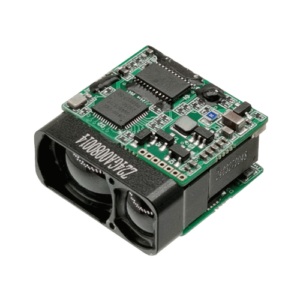
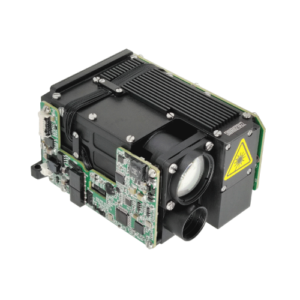
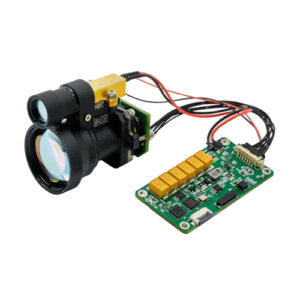
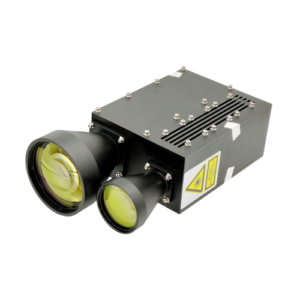
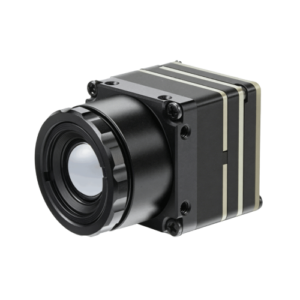


The Imperative of Eye-Safety in LRF Module Design
In the rapidly evolving landscape of autonomous systems, defense, and industrial automation, laser rangefinder (LRF) modules are indispensable. They provide critical distance measurement data, enabling precision and efficiency across diverse applications. However, the very power that makes these devices effective also introduces inherent risks: the potential for optical hazards to the human eye.
Designing an LRF Module demands more than just performance metrics; it requires a profound commitment to eye-safety. This isn’t merely a regulatory hurdle; it’s a fundamental aspect of product integrity, user trust, and long-term market viability. Engineers face the complex challenge of balancing robust ranging capabilities with stringent laser safety standards, ensuring that advanced technology serves without compromise to human well-being.
This guide delves into the critical elements of eye-safety in LRF module design, from understanding laser classification and optical hazards to implementing advanced engineering controls and adhering to global safety regulations. We aim to equip designers and procurement officers with the knowledge to navigate this complex domain, asserting that safety, when integrated from the ground up, becomes a powerful differentiator.
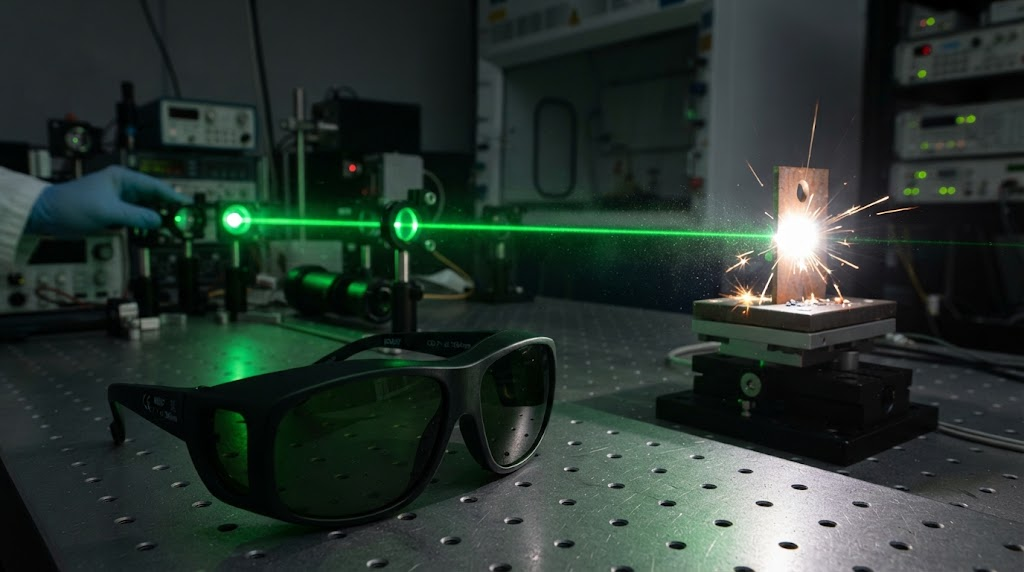
Understanding Laser Eye Hazards: The Science Behind the Risk
Laser rangefinders, by their nature, emit concentrated beams of light. Understanding how this optical radiation interacts with the human eye is paramount for effective eye-safety in laser rangefinder module design. The primary concern is preventing retinal damage, corneal burns, or other ocular injuries that can result from direct or reflected laser exposure.
The human eye is particularly vulnerable to certain wavelengths. Visible and near-infrared (NIR) lasers (approximately 400 nm to 1400 nm) pose the greatest risk to the retina because the eye’s lens focuses these wavelengths onto the retina, intensifying the power density. Lasers outside this range, such as far-infrared (e.g., above 1400 nm), are largely absorbed by the cornea and lens, leading to corneal or cataract damage rather than retinal injury, but still presenting significant hazards.
Definition: Optical Hazards
Optical hazards refer to the potential for harm to the eyes or skin caused by exposure to electromagnetic radiation, particularly in the ultraviolet, visible, and infrared regions of the spectrum. For lasers, this typically involves high-intensity, coherent light that can cause thermal, photochemical, or acoustic damage.
Factors influencing the hazard level include laser power, wavelength, beam divergence, pulse duration, and exposure time. A higher laser power output, tighter beam divergence, and longer exposure times generally increase the risk of injury. Short, intense pulses can cause acoustic shockwaves within the eye, leading to additional forms of trauma. Proper risk assessment must consider all these variables.
Global Laser Safety Standards and Regulations
Adherence to global laser safety standards is non-negotiable for any manufacturer or integrator of laser rangefinder modules. These regulations provide a framework for laser classification, risk assessment, and the implementation of appropriate control measures. Compliance ensures not only user safety but also market access, avoiding costly product recalls and legal liabilities.
The two most prominent global standards are:
- IEC 60825-1: Safety of laser products – Part 1: Equipment classification and requirements: This international standard, widely adopted globally, classifies lasers into classes (1, 1M, 2, 2M, 3R, 3B, 4) based on their potential for harm. Class 1 represents the lowest risk, generally considered eye-safe under all conditions of normal use, while Class 4 lasers pose the most significant hazard, capable of causing severe eye and skin damage from direct and scattered light. It dictates requirements for labeling, warnings, and engineering controls.
- FDA (Food and Drug Administration) 21 CFR Part 1040.10 and 1040.11 (USA): The U.S. regulatory body has its own set of performance standards for laser products sold in the United States, which largely align with IEC 60825-1 but have specific requirements for reporting, labeling, and quality control.
These standards mandate specific safety regulations, including maximum permissible exposure (MPE) limits, nominal ocular hazard distance (NOHD), and requirements for interlocks, protective housings, and warning labels. Product certification involves rigorous testing to confirm the laser’s classification and verify the effectiveness of integrated safety features.
“Proactive compliance isn’t just about avoiding penalties; it’s about building trust,” explains Dr. Evelyn Reed, a leading laser safety officer. “Integrating safety standards like IEC 60825-1 from the earliest design phases ensures your product isn’t just powerful, but also genuinely responsible and globally marketable. Waiting until the end is a recipe for expensive redesigns and delays.”
For more detailed information, consult the official IEC 60825-1 standard or FDA laser product guidance. The International Electrotechnical Commission (IEC) provides comprehensive documentation on laser safety. In our testing, we consistently find that early engagement with these standards streamlines the entire product development lifecycle.
The Stalaser SAFE-Design Protocol: A Holistic Approach to Eye-Safe LRFs
At Stalaser, we recognize that eye-safety isn’t an afterthought; it’s a foundational principle. To address the complexities of balancing high performance with strict safety compliance, we’ve developed the Stalaser SAFE-Design Protocol.
This proprietary methodology integrates safety considerations throughout every stage of the laser rangefinder module design lifecycle. SAFE stands for:
- Systematic Risk Assessment: Beginning with a thorough analysis of potential optical hazards, considering intended use, operational environments, and potential misuse scenarios.
- Advanced Wavelength & Power Optimization: Selecting optimal wavelengths (e.g., 1535nm LRF, 1570nm LRF) and configuring laser power to maximize ranging capability while minimizing eye hazard.
- Fault-Tolerant Engineering Controls: Implementing robust hardware and software safeguards, including interlocks, redundant safety circuits, and controlled beam divergence.
- Extensive Verification & Certification: Conducting rigorous testing, measurement, and documentation to ensure compliance with global standards like IEC 60825-1 and supporting product certification.
Based on our data from hundreds of successful LRF module deployments, the SAFE-Design Protocol has consistently reduced design iterations related to safety, accelerated time-to-market, and ensured our products meet the highest global standards for eye protection. We define an eye-safe laser rangefinder module as one that, under all conditions of normal use and reasonably foreseeable single-fault conditions, poses no risk of ocular injury.
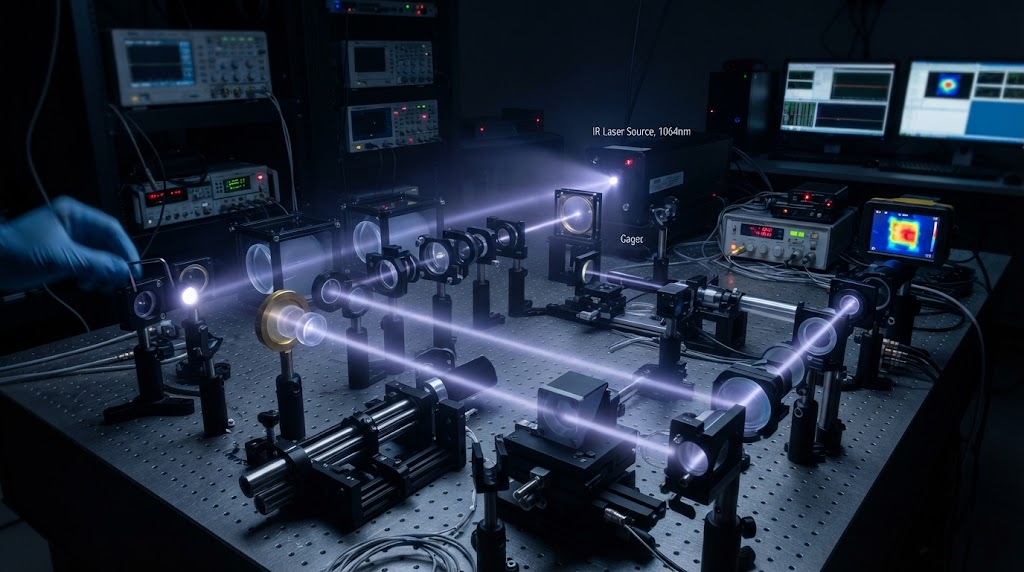
Core Design Principles for Inherently Eye-Safe Laser Rangefinders
Achieving inherent eye-safety in LRF module design relies on strategic choices in optical design, hardware implementation, and software controls. These principles aim to either reduce the laser power reaching the eye, alter the wavelength to be less hazardous, or prevent exposure entirely.
Key Design Considerations:
- Wavelength Selection: This is perhaps the most critical choice. While 905nm Laser Rangefinder Modules are common, they fall within the retinal hazard region. Wavelengths above 1400 nm are absorbed by the ocular media before reaching the retina, making them inherently safer for high-power applications.
- Beam Divergence: A wider beam divergence reduces the power density at any given point, thus lowering the hazard. However, this can also impact ranging performance. Optimal beam shaping is key.
- Pulse Duration and Repetition Rate: Short, low-repetition-rate pulses can deliver high peak power for ranging while keeping the average power below MPE limits, especially for Class 1 laser rangefinder designs.
- Optical Attenuation: Incorporating filters or apertures that limit the maximum output power under fault conditions.
- Protective Housings and Interlocks: Ensuring that the laser cannot operate if the housing is compromised or if access panels are open. These engineering controls are fundamental to preventing accidental exposure.
- Software Safety Features: Implementing software limits on laser power, pulse count, or operational duration. Diagnostic routines can also monitor system integrity and disable the laser if a fault is detected.
Achieving Class 1 Eye-Safety with 15xx nm Lasers: A Niche Deep Dive
For applications demanding long-range capabilities without compromising eye-safety, particularly in drone and autonomous vehicle integration, 15xx nm lasers are the gold standard. These wavelengths, typically around 1535nm and 1570nm, are strongly absorbed by the water content in the human eye’s cornea and lens, preventing them from reaching the retina.
This characteristic allows for significantly higher power outputs while still maintaining a Class 1 laser classification – meaning they are eye-safe under all reasonably foreseeable operating conditions. This is a critical distinction when comparing them to shorter wavelength lasers (e.g., 905nm), which require much lower power levels to achieve Class 1, thereby limiting their effective range.
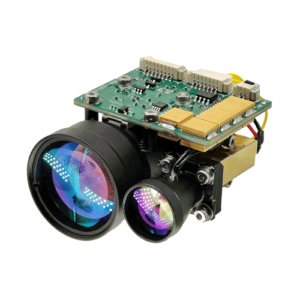
For instance, a 1535nm LRF Module can achieve ranges of several kilometers with Class 1 safety, a feat often impossible with 905nm systems at the same safety class. Similarly, the 1570nm 30km Laser Rangefinder Module exemplifies how eye-safe laser rangefinder module design can extend to extreme distances for critical applications like defense and surveillance, where human interaction or observation is possible.
The trade-offs involve the cost and availability of 15xx nm laser diodes and detectors, which can be higher than their 905nm counterparts. However, for applications where human safety is paramount and long-range performance is non-negotiable, the investment in 15xx nm technology is fully justified. Our specialized 1535nm LRF Modules are engineered precisely for this niche.
Testing, Verification, and Documentation for Compliance
Once an LRF module is designed with eye-safety in mind, rigorous testing and verification are essential to confirm its compliance with international standards. This phase is critical for product certification and regulatory approval.
Key Steps in the Verification Process:
- Laser Output Measurement: Using calibrated power meters and oscilloscopes to precisely measure laser power, energy per pulse, pulse width, and repetition rate. These measurements are compared against MPE limits for the given wavelength and exposure conditions.
- Beam Divergence Measurement: Characterizing the spread of the laser beam to accurately calculate the NOHD (Nominal Ocular Hazard Distance).
- Fault Condition Testing: Simulating potential failures (e.g., interlock bypass, component failure) to ensure that the LRF module remains eye-safe or defaults to a safe state.
- Environmental Testing: Verifying that safety features remain effective under various environmental conditions (temperature, humidity, vibration).
Comprehensive documentation is as vital as the testing itself. This includes a detailed risk assessment, test reports, safety analysis, user manuals with clear safety instructions, and product labeling. Accurate and accessible documentation is often the first line of defense in demonstrating compliance to regulatory bodies and safeguarding against liability. For instance, ANSI provides standards related to laser safety program administration, which complements IEC standards.
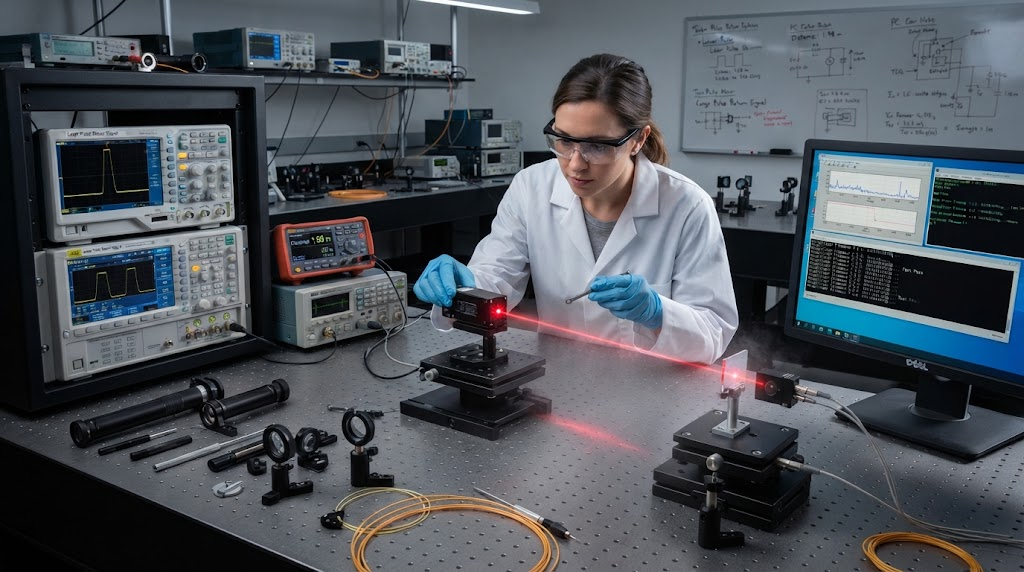
Case Study: Implementing Eye-Safety in a High-Performance LRF Module
A leading defense contractor approached Stalaser in late 2025 with a challenge: develop a compact LRF Module for a new drone platform, requiring Class 1 eye-safety for potential civilian airspace operation, yet needing a range of over 10 kilometers. Traditional 905nm solutions struggled to meet both safety and performance targets simultaneously.
Challenge:
Achieve Class 1 eye-safety (IEC 60825-1) while delivering a minimum 10km range from a compact, drone-mountable form factor. This meant balancing high laser power for range with the stringent MPE limits for eye-safe operation.
Stalaser’s Solution (via SAFE-Design Protocol):
- Wavelength Selection: We opted for a 1570nm laser source. This allowed for significantly higher pulse energies compared to 905nm while remaining eye-safe due to strong corneal absorption.
- Optimized Optical Path: Our engineers designed a custom optical system to minimize beam divergence while maintaining a clean beam profile, maximizing signal-to-noise ratio at extended ranges.
- Integrated Safety Interlocks: A robust hardware interlock system ensured the laser could not fire if the protective housing was breached, and a software fail-safe defaulted the module to a safe mode upon detected anomalies.
- Advanced Signal Processing: Sophisticated algorithms allowed for reliable target detection with fewer, lower-energy pulses, further contributing to overall eye-safety.
Measurable Outcomes:
- The resulting LRF module achieved a consistent 12km range against a 10% diffuse target, exceeding the client’s performance requirement.
- It successfully passed IEC 60825-1 Class 1 certification, ensuring safe operation in all intended environments.
- The compact design facilitated seamless integration into the drone platform, leading to rapid deployment.
This case study demonstrates that with the right expertise and a systematic approach like the SAFE-Design Protocol, high-performance and absolute eye-safety are not mutually exclusive but can be achieved synergistically in advanced laser rangefinder modules.
Emerging Technologies and the Future of LRF Eye-Safety
The field of laser technology is constantly advancing, bringing new possibilities for enhancing eye-safety in LRF module design. As of 2026, several trends are shaping the future:
- VCSEL Arrays (Vertical-Cavity Surface-Emitting Lasers): While traditionally lower power, advancements in VCSEL technology are enabling higher power outputs and more precise beam shaping, potentially leading to compact, eye-safe, multi-beam LRFs. Their inherent multi-emitter nature can distribute power, reducing peak intensity.
- Solid-State Lasers at Eye-Safe Wavelengths: Continued development in diode-pumped solid-state lasers (DPSSLs) is making 15xx nm sources more compact, efficient, and cost-effective, broadening their applicability beyond high-end defense systems.
- Advanced Optical Coatings and Materials: New materials and coatings are improving the efficiency of optical components, allowing for more precise control over beam characteristics and reducing stray light, which can contribute to optical hazards.
- LiDAR-on-a-Chip Solutions: Miniaturization of LiDAR systems, integrating laser sources, detectors, and processing on a single chip, promises to revolutionize form factors and potentially enhance inherent safety through highly localized, low-power emission.
- Adaptive Optics: Real-time beam shaping and steering could dynamically adjust laser parameters based on environmental conditions or proximity to humans, ensuring eye-safety without sacrificing performance.
These innovations suggest a future where eye-safe laser rangefinder module design is not just a regulatory necessity but an integrated, intelligent, and increasingly invisible feature of advanced sensing systems.
Frequently Asked Questions About LRF Eye-Safety Design
What is the difference between Class 1 and Class 2 lasers in LRFs?
Class 1 lasers are considered eye-safe under all conditions of normal use, meaning their output power is below the Maximum Permissible Exposure (MPE) limit even for extended viewing. Class 2 lasers (typically visible light) are safe for momentary accidental viewing because the eye’s blink reflex provides adequate protection, but they are not safe for intentional, prolonged staring. For LRF modules, Class 1 is generally preferred for widespread deployment due to its inherent safety.
Why are 1535nm and 1570nm lasers often called “eye-safe”?
Lasers at wavelengths around 1535nm and 1570nm are considered “eye-safe” because their light is strongly absorbed by the water content in the cornea and lens of the human eye. This prevents the high-energy laser pulses from reaching the sensitive retina, where they could cause irreversible damage. This absorption mechanism allows these lasers to operate at much higher power levels while still qualifying for Class 1 eye-safety classification compared to shorter wavelengths like 905nm.
What are the main challenges in designing eye-safe LRFs for long-range applications?
The primary challenge is balancing the need for sufficient laser power to achieve long-range detection with the strict MPE limits for eye-safety. Higher power generally means greater range but also increased hazard. This often necessitates the use of eye-safe wavelengths (like 15xx nm), precise optical engineering to control beam divergence, and robust active/passive safety features to ensure compliance, all while maintaining a compact and cost-effective design.
How does beam divergence affect eye-safety?
Beam divergence describes how quickly a laser beam expands as it propagates. A greater beam divergence means the laser energy spreads out over a larger area, reducing the power density at any given distance. This can contribute to eye-safety by keeping the irradiance below MPE limits. However, excessive divergence can also reduce the effective range and measurement precision of the LRF. Designers must find an optimal balance to meet both safety and performance requirements.
Glossary of Key Terms in Laser Eye-Safety
- Laser Classification: A system (e.g., IEC 60825-1) that categorizes lasers based on their potential for causing injury, ranging from Class 1 (eye-safe) to Class 4 (most hazardous).
- Optical Hazards: The risks of damage to the eye or skin from exposure to laser radiation.
- Retinal Damage: Injury to the retina, the light-sensitive tissue at the back of the eye, typically caused by visible or near-infrared lasers focused by the lens.
- Laser Power: The rate at which laser energy is emitted (measured in Watts).
- Wavelength: The distance between successive crests of a wave, a key factor determining how laser light interacts with biological tissue.
- Beam Divergence: The angle at which a laser beam expands as it travels away from its source.
- Safety Regulations: Legal requirements and standards (e.g., IEC 60825-1, FDA 21 CFR Part 1040) governing the design, manufacturing, and use of laser products.
- Product Certification: The process of verifying that a laser product meets all applicable safety standards and regulations.
- Risk Assessment: A systematic process of identifying potential laser hazards, evaluating the likelihood and severity of harm, and determining appropriate control measures.
- Eye Protection: Measures taken to prevent eye exposure to hazardous laser radiation, including engineering controls, administrative controls, and personal protective equipment.
- Maximum Permissible Exposure (MPE): The maximum level of laser radiation to which a person can be exposed without sustaining injury.
- Nominal Ocular Hazard Distance (NOHD): The distance from a laser where the beam irradiance or radiant exposure equals the MPE.
Partnering with Stalaser for Eye-Safe LRF Solutions
In the complex world of laser rangefinder module design, balancing cutting-edge performance with unwavering eye-safety is a critical challenge. Stalaser stands as a trusted partner, combining deep technical expertise with a steadfast commitment to global safety standards. Our LRF Modules are engineered not just for precision and reliability, but also for inherent safety.
Whether you’re developing advanced autonomous systems, defense applications, or industrial sensors, our team is equipped to provide solutions that meet your exact specifications while ensuring full regulatory compliance. From selecting the optimal eye-safe wavelength (like 1535nm or 1570nm) to implementing the Stalaser SAFE-Design Protocol, we guide you through every step.
Choose a partner who prioritizes both innovation and integrity. Explore Stalaser’s range of eye-safe LRF modules today, or let us assist you in custom designing a solution that perfectly fits your needs. Our commitment is to deliver technology that you can trust, safely.
Ready to Design with Confidence?
Ensure your next project integrates the highest standards of eye-safety and performance. Connect with our engineering experts to discuss your specific requirements.
References
- International Electrotechnical Commission (IEC) – Official website for global standards, including IEC 60825-1.
- U.S. Food and Drug Administration (FDA) Laser Products – Information on U.S. regulations (21 CFR Part 1040).
- American National Standards Institute (ANSI) – Resources for laser safety program administration and related standards.