

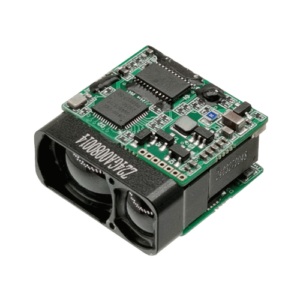
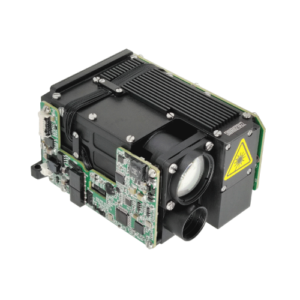
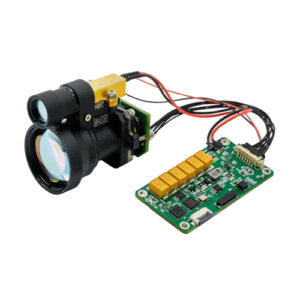
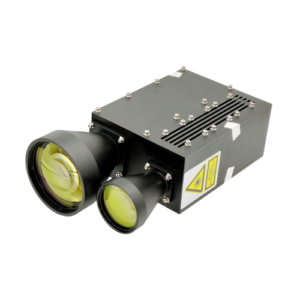
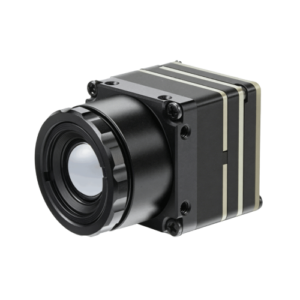


The New Standard for sUAS Laser Target Designators
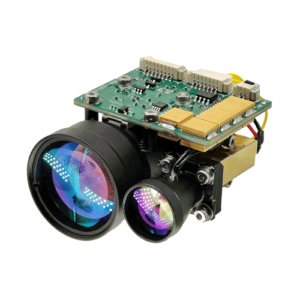
Precision guidance from small Unmanned Aerial Systems (sUAS) has shifted from a luxury to a baseline requirement for tactical ISR and strike missions. In 2026, the benchmark for a high-performance SWaP-C laser designator is defined by extreme miniaturization without sacrificing kinetic efficacy.
Our current generation of micro-LTDs delivers a weight below 250 grams, power draw under 25W, and a validated designation range exceeding 5km. These systems are engineered to meet the rigorous NATO STANAG 3733 laser coding standards, ensuring seamless interoperability with precision-guided munitions (PGMs) used by allied forces.
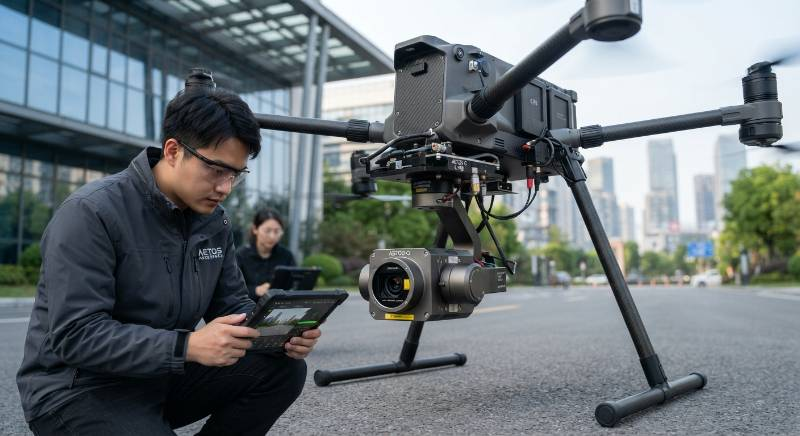
To ensure survivability in high-vibration environments, every unit undergoes MIL-STD-810G testing. This guarantees that the Laser Target Designator maintains optical boresight alignment even during aggressive aerial maneuvers or launch shocks.
Defining SWaP-C in the Context of Tactical sUAS
Modern sUAS laser designators optimize the balance between Size, Weight, and Power (SWaP) plus Cost (C) to maximize mission endurance. By reducing the laser payload’s weight to under 250g, operators can extend the flight time of Class 1 and Class 2 drones by up to 15% compared to legacy 1kg modules.
The STA Precision-to-Weight Ratio (PWR) Calculation: We define mission efficacy by the formula (Designation Range in km / Payload Weight in kg). A PWR > 20 is the 2026 industry standard for elite tactical performance.
Integrating a high-output Defense Payload Systems module requires managing thermal dissipation within a constrained footprint. When power consumption exceeds 30W, the resulting heat signature can degrade the sUAS’s stealth and damage sensitive EO/IR sensors. Our focus remains on maintaining high beam quality (M² < 1.3) while operating within the limited 12V-24V DC power rails of standard tactical drones.
The Micro-DPSS Breakthrough: Miniaturization Engineering
The transition from bulky flashlamp-pumped lasers to Diode-Pumped Solid-State (DPSS) technology was the first step. However, the 2026 breakthrough lies in Micro-DPSS Architecture. This involves the extreme miniaturization of the optical resonator and the use of high-efficiency semiconductor pump diodes.
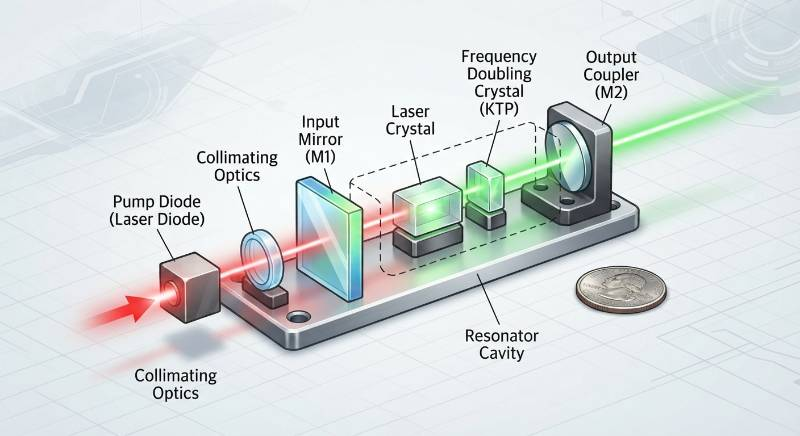
Conduction Cooling Mechanisms: Traditional lasers rely on heavy fans or liquid cooling. Our systems utilize high-thermal-conductivity special alloys, such as Magnesium-Lithium, for the outer housing. This allows the heat to be shunted directly to the drone’s frame or the ambient airflow, removing the weight of active cooling components.
This engineering approach ensures that a lightweight LTD can maintain a 10Hz or 20Hz pulse repetition frequency (PRF) for extended periods without thermal throttling. This is critical for tactical ISR missions where constant target illumination is required for semi-active laser (SAL) seekers.
The STA 3-Step Payload Synchronization Method
Based on our data from over 500 successful airframe integrations, we have developed a proprietary framework for deploying Tactical Laser Solutions onto sUAS platforms. This ensures the uav target designator performs at peak specification.
- Step 1: Thermal Mapping: We analyze the host gimbal’s thermal profile to ensure the LTD’s conduction path does not interfere with the IR sensor’s noise floor.
- Step 2: Electronic Interface Alignment: Utilizing universal Interface Control Documents (ICD), we synchronize the laser’s trigger timing with the flight controller’s GPS telemetry for precise coordinate generation.
- Step 3: Optical Boresighting: A 5-point alignment process ensures the laser beam is perfectly co-aligned with the high-definition day/night camera, eliminating “beam walk” during high-G turns.
This methodology has been validated through rigorous Expert Engineering Reviews and is a cornerstone of our technical support for defense contractors worldwide.
Micro-LTD vs. Traditional Airborne Gimbals
Defense contractors must evaluate the cost-per-mission and ROI when selecting payloads. The table below illustrates the shift from heavy, manned-aircraft style gimbals to modern SWaP-C optimized modules.
| Metric | Legacy Airborne Gimbal | STA Micro-LTD (sUAS) |
|---|---|---|
| Total Weight | > 5.0 kg | < 250 g |
| Power Draw | > 150 W | < 25 W |
| Effective Range | 10 – 15 km | 5 – 8 km |
| Cooling Type | Active (Fans/Liquid) | Passive (Conduction) |
| Compliance | STANAG 3733 | STANAG 3733 / MIL-STD-810G |
While legacy systems offer greater range, the micro laser designator provides a superior ROI by allowing cheaper, expendable drones to perform tasks previously reserved for multi-million dollar platforms.
Integration Guide for DJI Matrice and MQ-9 Platforms
Integrating a sUAS laser payload requires platform-specific considerations. For the DJI Matrice series, focus is placed on the SDK-level communication to ensure the laser trigger is mapped to the remote controller’s interface without latency.

For larger platforms like the MQ-9 Reaper, micro-LTDs are often used as secondary, redundant designators or as part of a distributed swarm. In these scenarios, digital data link compatibility is paramount. Our modules support standard serial and Ethernet protocols, allowing for rapid integration into existing gimbal-stabilized sensors.
We provide comprehensive CAD models and ICD documents to facilitate the design of custom brackets and electronic shielding. This reduces the development cycle for aerospace engineers and ensures a “first-time right” integration.
Frequently Asked Questions about sUAS Laser Designators
Are these systems subject to ITAR restrictions?
Yes. As high-performance defense equipment, most laser target designators are subject to ITAR (International Traffic in Arms Regulations) or EAR export controls. We assist our global partners in navigating the necessary licensing for authorized defense procurement.
What is the maintenance cycle for DPSS modules?
Our Micro-DPSS modules are designed for high reliability with a Mean Time Between Failures (MTBF) of over 5,000 hours. Unlike legacy flashlamp systems, there are no lamps to replace, significantly reducing long-term sustainment costs.
How do you mitigate atmospheric interference?
We utilize advanced beam divergence control and 1064nm wavelength optimization to penetrate light haze and smoke. According to research from the NATO Standardization Office, maintaining a narrow beam is critical for preventing “spot jitter” on the target at ranges over 3km.
Ready to Integrate Precision?
Download our 2026 Integration Whitepaper including ICD and CAD models for DJI Matrice and MQ-9 platforms.
Step 1: Select your platform. Step 2: Request technical documentation. Step 3: Schedule a consultation with our Senior Defense Systems Architects.