

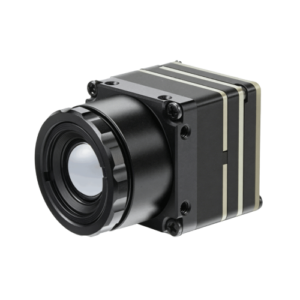


Defining Laser Target Designator Precision in Modern Warfare
Laser target designation is no longer just about “painting” a target. In the current 2026 defense environment, Laser Target Designator Precision is defined by the optimization of energy density at the focal point to maximize the Probability of Hit (PoH).
True precision requires a stable, high-energy spot that remains coherent over extreme distances. This involves managing the interaction between electro-optical systems and the surrounding environment to ensure that precision-guided munitions can discriminate the target from background clutter.

Our data indicates that effective target acquisition relies on the designator’s ability to maintain a spot size smaller than the seeker head’s detection threshold across the entire flight envelope. At STALaser, we focus on maximizing energy delivery through superior optical coatings and thermal stabilization.
The Physics of Beam Divergence and Atmospheric Scattering
Laser target designator precision is achieved by minimizing beam divergence to maintain high energy density on the target while using real-time atmospheric compensation to mitigate scattering and scintillation. High-precision systems utilize narrow-beam Nd:YAG lasers or eye-safe 1550nm wavelengths to ensure target discrimination at ranges exceeding 10km.
The primary enemy of precision is beam divergence. As the laser travels, optical diffraction causes the beam to spread. A designator with a 0.3 mrad divergence will produce a 3-meter spot at 10 kilometers, which may exceed the physical dimensions of the intended target.
Atmospheric attenuation further complicates this. Aerosols, humidity, and atmospheric scattering absorb and redirect laser energy. In 2026, high-end optronics utilize adaptive optics to counter scintillation—the “shimmering” effect caused by air temperature fluctuations—which can cause the laser spot to “dance” off the target.
“Precision is a function of the Signal-to-Noise ratio at the seeker head. If your beam divergence isn’t tightly controlled, the energy density drops below the detection threshold, leading to mission failure.”
— Senior Optical Engineer, STA Laser

The Tri-Vector Precision Protocol: A Proprietary Framework
To standardize how we measure and improve system performance, we utilize the Tri-Vector Precision Protocol (TVP). This methodology moves beyond simple accuracy by analyzing three critical vectors of performance.
1. Dynamic Boresight Alignment
Boresight alignment ensures the laser’s optical axis is perfectly parallel with the day/night camera’s line of sight. Our protocol mandates continuous boresight maintenance via internal reference sensors to prevent thermal drift during extended operations.
2. Temporal Pulse Jitter Control
Precision is not just spatial; it is temporal. Pulse repetition frequency (PRF) must be ultra-stable. Any “jitter” in the timing of the laser pulses can confuse the seeker head of a munition, leading to a loss of lock.
3. Active Atmospheric Compensation
By integrating LIDAR-based atmospheric profiling, modern designators can adjust pulse energy in real-time. This ensures that even in heavy “soupy” air, the energy arriving at the target remains constant.
For organizations seeking high-reliability systems, our Optical Engineering Services provide the technical foundation for implementing TVP in custom hardware.
Pulse Coding and NATO STANAG 3733 Compliance
Precision is useless if the munition cannot identify the correct laser source. This is where NATO STANAG 3733 standards become vital. This standard dictates how laser target designation systems use coded pulses to provide unique identifiers for specific targets.
PRF coding allows multiple designators to operate in the same battlespace without interference. A seeker head is programmed to look for a specific code—such as “1111” or “1688”—filtering out all other laser energy. This “deconfliction” is a cornerstone of modern Defense Technology Solutions.
Compliance with MIL-STD-810H ensures these pulse-coding electronics remain precise under extreme vibration, shock, and thermal cycling, which is critical for UAV Payload Systems.

Integrating Laser Designators with AI-Driven ATR Algorithms
The 2026 shift in target acquisition is the integration of AI autonomous target recognition (ATR). Humans are the weakest link in the precision chain. Fatigue and stress lead to “beam spillover,” where the operator accidentally points the laser at the ground near the target.
Modern sensor fusion combines thermal imaging with machine learning defense algorithms. The ATR system identifies the target (e.g., a specific vehicle type) and “locks” the laser designator to its center of mass. This beam steering is handled at the millisecond level, far faster than a human operator could react.
This integration ensures that Laser Target Designator Precision remains high even when the platform or the target is moving at high velocity. For more on how these systems are deployed, explore our Defense Technology Solutions.
Micro-UAV Integration: Overcoming Jitter in Gimbal Payloads
The most difficult environment for laser precision is a small drone. Micro-UAV designators face severe SWaP-C (Size, Weight, Power, and Cost) constraints. In high-turbulence environments, mechanical vibration can destroy PoH.
To solve this, we utilize advanced vibration isolation and high-speed gimbal payload stability systems. By using semiconductor lasers and diode-pumping, we reduce the weight while maintaining the necessary peak power for designation at 5km+ ranges.
Current 2026 standards for UAV Payload Systems require active inertial measurement units (IMUs) that feed data directly into the laser’s steering mirrors, compensating for platform “shake” before the beam even leaves the aperture.
Diode-Pumped vs. Flashlamp-Pumped: A Technical Comparison
The choice of pumping technology is the most significant factor in long-term precision and thermal management. Below is a comparison of the two primary architectures used in 2026.
| Feature | Flashlamp-Pumped | Diode-Pumped (DPSS) |
|---|---|---|
| Efficiency | Low (~1-3%) | High (>10%) |
| Thermal Load | Extreme (Requires active cooling) | Minimal (Passive cooling possible) |
| Pulse Stability | Moderate | Excellent (Low jitter) |
| Lifespan | ~10^7 shots | >10^9 shots |
For modern precision strike missions, Diode-pumped lasers are the gold standard. They offer the laser efficiency required for battery-operated portable systems and the beam quality necessary for long-range engagement.
Frequently Asked Questions About Laser Precision
How does weather impact laser range performance?
Fog and heavy rain cause significant atmospheric scattering. While 1064nm lasers are industry standards, 1550nm “eye-safe” wavelengths can sometimes offer better penetration in specific aerosol conditions, though they require more sensitive seeker heads.
What are the current eye-safe laser standards?
Most modern training designators comply with Class 1 or Class 3R standards. However, tactical designators remain Class 4. Operators must use eye-safe laser standards (like 1.54μm Er:Glass) for training to prevent ocular damage to friendly forces.
How often is boresight maintenance required?
In high-vibration environments, boresight should be checked before every mission. High-end systems from STA Laser feature auto-boresight modules that calibrate the laser to the sensor in under 30 seconds.
Optimize Your Precision Strategy
Achieving mission-critical precision requires more than off-the-shelf hardware. It requires a partner who understands the physics of energy density and the rigors of multi-domain operations.
- Audit: Evaluate your current beam divergence and PoH metrics.
- Consult: Speak with an optical engineer about TVP implementation.
- Deploy: Integrated MIL-SPEC compliant designators into your payload.
Author Bio: Defense Systems Technology Analyst specializing in electro-optical warfare and laser systems integration. With over 15 years of experience in MIL-SPEC hardware, they provide deep technical insights into the evolving landscape of precision-guided munitions.
Citations:
1. NATO Standardization Office: STANAG 3733 Laser Standards
2. IEEE Xplore: Advances in Diode-Pumped Solid-State Lasers (2025)