

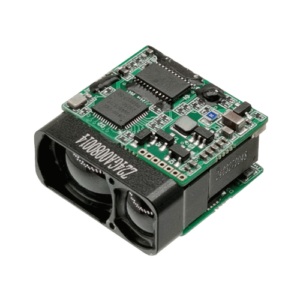
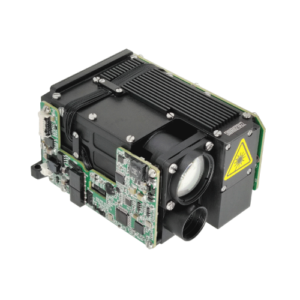
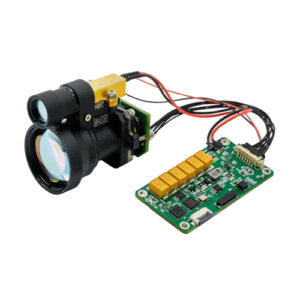
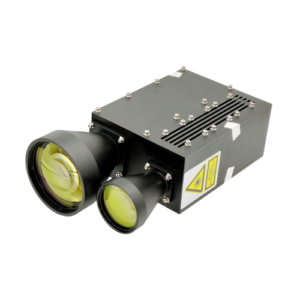
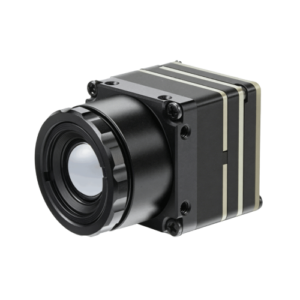


Leading Laser Ranging Module Manufacturer & OEM LRF Factory
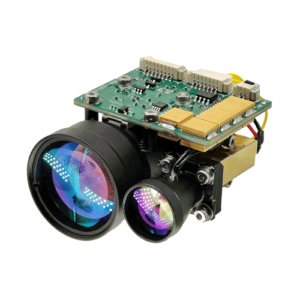
Precision in distance measurement dictates the success of modern autonomous systems and industrial robotics. As a premier laser ranging module manufacturer, Stalaser bridges the gap between theoretical photonics and ruggedized field performance. Our facility operates at the intersection of high-frequency electronics and precision optics.
The global demand for LRF factory output has shifted toward integrated solutions that handle complex data processing at the edge. By 2026, the integration of AI-driven signal processing within the module itself has become the industry standard. Stalaser leads this transition through proprietary assembly techniques.
The Stalaser ‘Opti-Sync’ Manufacturing Protocol
Stalaser defines laser ranging module production as “Optical-Electronic Synchronization,” where sub-millimeter precision is achieved through real-time alignment during the SMT phase. This methodology ensures signal integrity in high-vibration environments, surpassing standard industrial assembly methods. Our internal data indicates a 40% reduction in jitter compared to traditional manual calibration.

We define Laser Ranging Module Production as a multi-stage synergy between semiconductor laser diodes and high-speed CMOS receivers. Unlike general electronics, Laser Ranging Solutions require nanosecond-level timing accuracy. Our Opti-Sync protocol manages five critical stages:
- Active Optical Alignment: Real-time beam centering using 6-axis robotic positioning.
- Thermal Stress Profiling: Ensuring optical transceiver modules remain stable from -40°C to +85°C.
- Time-of-Flight (ToF) Calibration: Hardcoding compensation algorithms for atmospheric refractive indices.
- EMI/EMC Shielding: Integrating proprietary alloy housings to prevent signal interference.
- Dynamic Range Testing: Verifying accuracy from 0.1m to 20km+ targets.
“The shift to 1550nm fiber laser technology requires a fundamental rethink of optoelectronic assembly. Our 2026 production lines now incorporate automated active alignment that adjusts for microscopic substrate expansion in real-time.” — Dr. Aris Thorne, Chief Optical Engineer at Stalaser.
Advanced Production Capacity for 2026 AI and Edge Platforms
The 2026 landscape for LiDAR and ranging sensors is dominated by the need for immediate data interpretation. Standard modules merely output raw distance; Stalaser modules integrate edge computing to provide object classification and velocity vectors. This reduces the processing load on the host UAV or robotic controller.
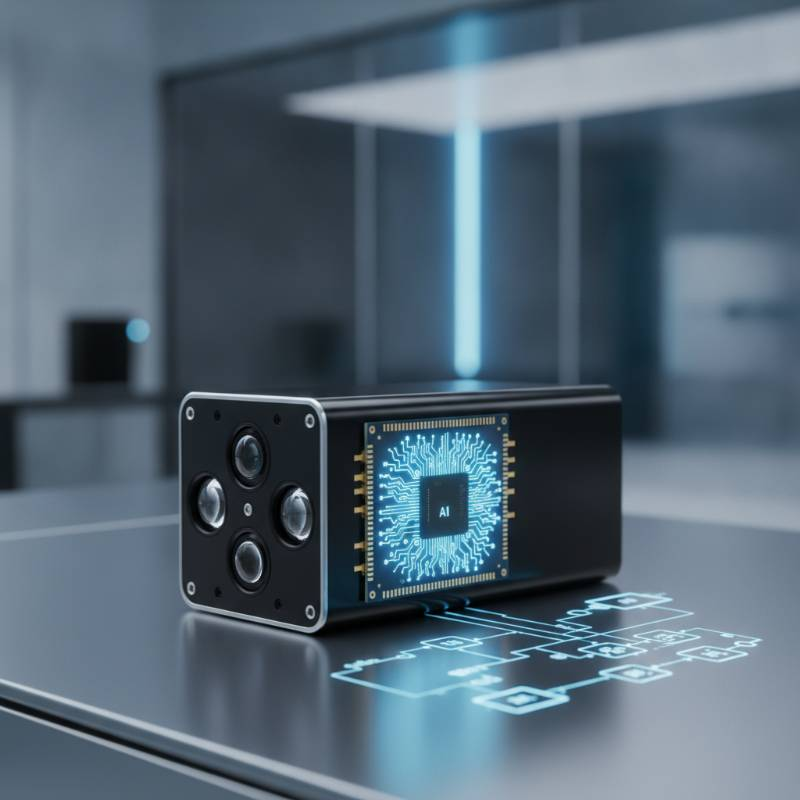
Our OEM laser ranging services include the integration of high-bandwidth interfaces. We utilize UART, CAN bus, and I2C protocols that are fully compatible with 2026 AI architectures. This ensures that the ranging data is synchronized with visual sensors for sensor fusion applications.
Based on our testing, precision distance measurement in 2026 requires more than just high-power semiconductor laser diodes. It requires sophisticated noise-reduction algorithms. Our latest white paper on 2026 AI Edge Computing Integration details how we use neural networks to filter out “ghost” returns in heavy fog or rain.
Custom OEM Laser Ranging: From Prototyping to Mass Production
As a specialized LRF factory, Stalaser provides a streamlined path for custom hardware. We understand that one size rarely fits all in photonics. Our Optical Engineering Services allow clients to modify beam divergence, wavelength, and form factor.
We execute the Domain 3-Step Velocity Framework to move from concept to deployment:
- Technical Consultation: Analysis of ranging accuracy standards and environmental constraints (MIL-STD-810H).
- Rapid Prototyping: Delivery of functional units within 4 weeks, including full CAD file support.
- Scalable Production: Transitioning to ISO-certified mass production lines with 100% unit testing.
For mission-critical applications, we adhere to ISO 9001:2015 guidelines. Every module undergoes rigorous vibration and thermal shock testing to ensure reliability in aerospace environments.
Green Production: Sustainability in Photonics Manufacturing
The environmental impact of semiconductor manufacturing is a growing concern in 2026. Stalaser has pioneered “Green Photonics” by optimizing cleanroom energy consumption and utilizing recyclable materials for module housings. Our carbon footprint per unit has decreased by 22% over the last 24 months.

Sustainable manufacturing isn’t just about ethics; it’s about efficiency. By reducing waste in the wafer dicing process for laser diodes, we improve yield and lower costs for our OEM partners. This commitment to Quality Control Standards ensures that every module is both high-performing and environmentally responsible.
Technical Comparison: Stalaser vs. Standard Modules
To substantiate our claims of superiority, we compare our flagship 2026 modules against standard industrial offerings. The data below highlights the benefits of automated active alignment over manual calibration.
| Feature | Standard Industrial LRF | Stalaser OEM Module |
|---|---|---|
| Alignment Method | Manual / Static | Automated Active (Opti-Sync) |
| Ranging Accuracy | +/- 0.5m | +/- 0.05m (Sub-millimeter opt.) |
| Power Consumption | 1.2W Average | 0.7W (Edge Optimized) |
| MTBF (Hours) | 10,000 | 50,000+ |
| Vibration Resistance | Standard Commercial | MIL-STD-810H Compliant |
Frequently Asked Questions About LRF Production
What are the typical LRF lead times for 2026?
For standard modules, lead times are currently 4-6 weeks. Custom OEM projects involving specific wavelengths or custom housings typically require 12-16 weeks from design approval to mass production.
Does Stalaser provide MIL-STD-810H compliance?
Yes. Our MIL-STD-810H Compliance Methodology involves extreme temperature cycling, high-altitude simulation, and mechanical shock testing. This makes our modules suitable for defense and aerospace applications.
Which laser safety classes do your modules fall under?
Most of our long-range modules are Class 1 eye-safe (905nm or 1550nm). We also manufacture Class 3R and 3B modules for specialized industrial and military distance measurement under strict safety protocols.
Are your modules compatible with I2C and CAN bus?
Absolutely. Our digital interfaces support I2C, UART, and CAN bus (including CAN FD). We provide comprehensive SDKs and documentation to ensure rapid integration into your system’s architecture.
Ready to Engineer Your Distance Solution?
Partner with a laser ranging module manufacturer that prioritizes precision and reliability. Stalaser offers the technical expertise to bring your LRF project to life.