

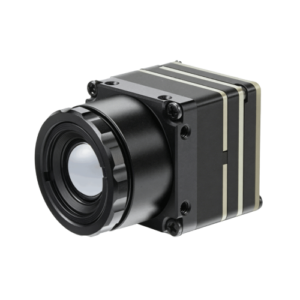


Introduction: The Imperative of Precision in Modern Warfare
Modern military operations demand unprecedented precision. The ability to engage targets accurately, minimize collateral damage, and maximize operational effectiveness is no longer an advantage—it’s a fundamental requirement.
This escalating demand drives the critical role of advanced defense technology, particularly in targeting systems. Among these, the Laser Target Designator (LTD) stands out as a cornerstone technology for achieving strategic objectives in complex environments.

What is a Laser Target Designator? Defining the Core Technology
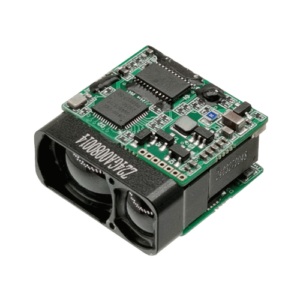
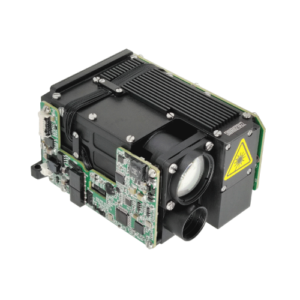
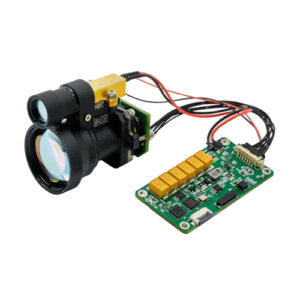
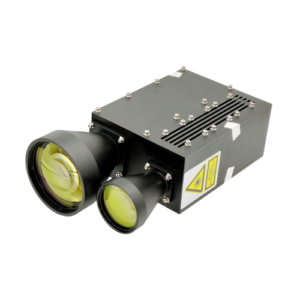
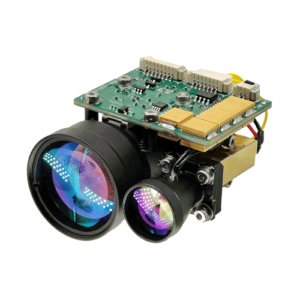
A Laser Target Designator (LTD), often referred to as an LRD, is an optical device used by military personnel to mark a target with a laser beam. This beam provides guidance for precision-guided munitions, ensuring they strike the intended objective with high accuracy.
The system works by “painting” a target with an infrared (IR) laser, invisible to the naked eye. This allows aircraft, drones, or ground units equipped with appropriate sensors to detect the reflected laser energy and guide weapons to the designated spot.
Definition: A Laser Target Designator (LTD) is an electro-optical device that emits a coded laser beam to illuminate a specific target, enabling precision-guided munitions (PGMs) equipped with laser seekers to home in on the reflected energy for accurate engagement.
How LRDs Work: The Science of Precision Targeting
The core science behind laser targeting involves a pulsed laser beam. The LRD emits short, high-energy laser pulses, typically in the infrared spectrum. These pulses travel to the target and reflect off its surface.
Precision-guided munitions (PGMs), such as laser-guided bombs or missiles, carry a laser seeker in their nose. This seeker detects the reflected laser energy, interprets the coded pulses, and uses them to calculate the target’s position relative to the munition.
The munition then adjusts its flight path in real-time to continuously home in on the laser spot. This feedback loop ensures exceptional accuracy, even against moving targets. The specific laser type and beam characteristics are crucial for effective target illumination and preventing spoofing.
Key Components of an LRD System
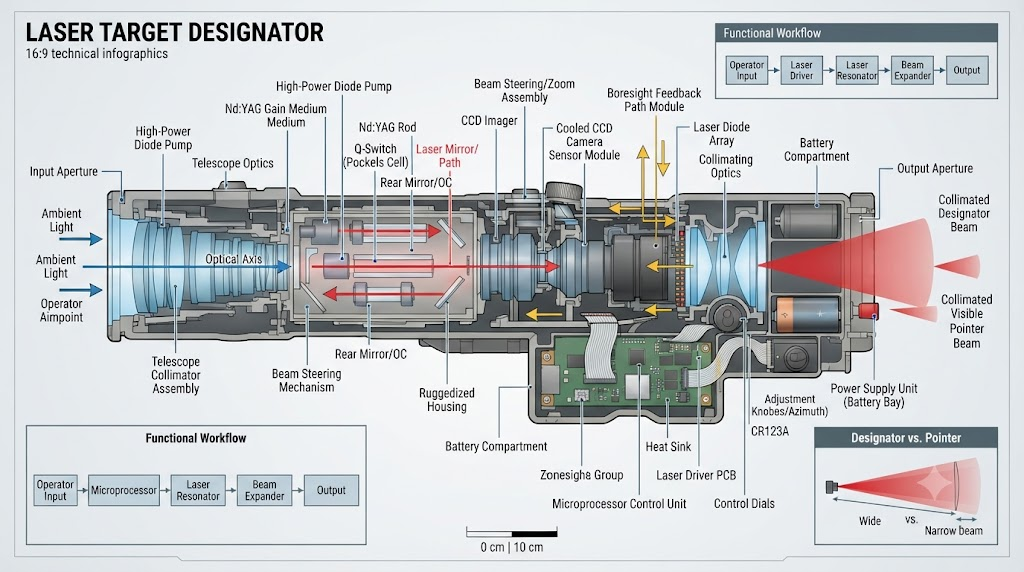
A typical LRD system integrates several sophisticated components to achieve its precision role:
- Laser Emitter: The heart of the system, generating the high-power, coded laser pulses. Modern emitters are compact and energy-efficient.
- Optical System: Lenses and mirrors that shape and focus the laser beam, often including a rangefinder for accurate distance measurement.
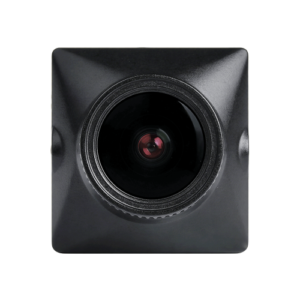
- Thermal/Daylight Imager: Provides operators with a clear visual of the target, both day and night, for identification and tracking.
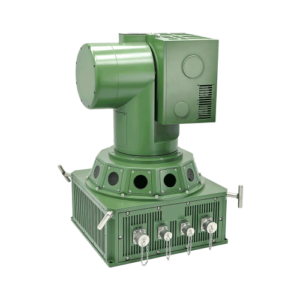
- Stabilization Platform: Essential for maintaining a steady laser beam on target, especially in dynamic environments or when handheld.
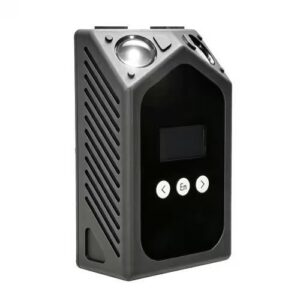
- Control Interface: Ergonomic controls and displays for operators to select targets, manage laser output, and transmit data.
- GPS/INS: Integrated Global Positioning System and Inertial Navigation System for precise self-location and target coordinate generation.
These components work in concert, forming a robust system capable of pinpoint target acquisition technology.
Military Applications: LRDs in Action Across the Battlefield
Laser Target Designators are indispensable across a wide spectrum of military operations, enhancing battlefield awareness and operational effectiveness. From ground forces to air and naval assets, their utility is profound.

Close Air Support (CAS) and Precision-Guided Munitions
One of the most critical applications of LRDs is in Close Air Support (CAS). Forward air controller (FAC) teams on the ground use LRDs to designate targets for attack aircraft, enabling the accurate deployment of precision-guided munitions (PGMs).
This capability is vital for supporting ground troops in contact, allowing air assets to strike with minimal risk of collateral damage. The coordination between the FAC and aircrew, facilitated by the LRD, ensures that targets are engaged swiftly and precisely, maximizing air-to-ground targeting effectiveness.
According to a report by the US Department of Defense, the integration of laser targeting significantly increases the probability of a first-pass hit, reducing mission time and exposure to threats. (U.S. Department of Defense)
Enhancing Reconnaissance and Surveillance
LRDs are not solely for striking. They also play a significant role in intelligence, surveillance, and reconnaissance (ISR) missions. By precisely designating points of interest, LRDs aid in accurate target identification and tracking for intelligence gathering.
This allows for enhanced situational awareness, ensuring that surveillance assets can focus on specific areas or objects. The ability to precisely geo-locate and mark features contributes significantly to mission planning and post-mission analysis.
Naval and Artillery Fire Support
Beyond air support, LRDs are increasingly integrated into naval gunfire and artillery systems. They provide critical target acquisition for land-based fire support and sea-based engagements.
Naval vessels can use LRDs for precision shore bombardment, while artillery units leverage them for accurate targeting of high-value static or slow-moving targets. This expands the reach and precision of indirect fire assets.
Seamless Integration with Unmanned Aerial Vehicles (UAVs)
The rise of unmanned aerial vehicles (UAVs) has opened new frontiers for LRD deployment. Many modern UAVs are equipped with integrated laser designators, offering persistent surveillance and targeting capabilities.
This allows for remote target designation, reducing risk to personnel and extending operational reach. For more on this, explore our UAV Integration Technologies.
Drones with LRDs can loiter over targets for extended periods, providing continuous illumination for guided munitions or passing target coordinates to other platforms. This capability is a game-changer for ISR and strike missions.
The ‘Adaptive Engagement Protocol’: Optimizing LRD Use in Dynamic Urban Environments
Operating Laser Target Designators in complex urban environments presents unique challenges: cluttered line-of-sight, reflective surfaces, and the ever-present risk of non-combatant presence. To address these, STA Laser has developed the Adaptive Engagement Protocol—a unique methodology for maximizing LRD effectiveness and safety.
Based on our extensive field trials and operational feedback, this three-phase framework provides a systematic approach to dynamic targeting in the most demanding scenarios.
Phase 1: Real-time Environmental Assessment
The initial phase focuses on immediate, granular analysis of the operational battlespace. This includes:
- Urban Terrain Mapping: Identifying potential obstructions, reflective surfaces (glass, polished metal), and narrow engagement corridors that could scatter or obscure the laser beam.
- Atmospheric Conditions: Assessing factors like humidity, dust, and smoke, which can degrade laser performance and range.
- Non-Combatant Presence: Constant vigilance for civilian movement and infrastructure, informing no-strike zones and ensuring stringent rules of engagement.
This real-time environmental analysis is critical for selecting optimal LRD positions and validating target solutions.
Phase 2: Dynamic Target Hand-off Procedures
Urban battlespaces are fluid, often requiring rapid shifts in target responsibility. This phase outlines robust protocols for seamless hand-offs:
- Multi-Platform Coordination: Establishing clear communication channels and shared situational awareness between ground teams, UAV Integration Technologies, and air assets.
- Designation Prioritization: Assigning primary and secondary designators to maintain continuous illumination even if one asset is suppressed or repositioned.
- Positive Identification (PID): Strict adherence to PID protocols before laser activation, often involving multiple ISR feeds and human confirmation.
These procedures minimize delays and ensure uninterrupted laser guidance for precision-guided munitions.
Phase 3: Post-Engagement Analysis and Feedback
Continuous improvement is baked into the Adaptive Engagement Protocol. This final phase emphasizes:
- Immediate Battle Damage Assessment (BDA): Utilizing ISR assets to verify target neutralization and assess any unintended effects.
- Data Collection: Recording LRD performance metrics, environmental factors, and operator feedback for each engagement.
- Tactical Refinement: Integrating lessons learned into training programs and operational guidelines to continually enhance LRD effectiveness and safety in future missions.
This feedback loop ensures that our methodologies evolve with the dynamic nature of urban combat.
Advanced LRD Technologies: Features and Specifications
Modern Laser Target Designators are sophisticated pieces of defense technology, engineered to meet the stringent demands of military and defense applications. For engineers and procurement officers, understanding the key features and specifications is paramount.
SWaP-C Optimization: Size, Weight, Power, and Cost
The acronym SWaP-C (Size, Weight, Power, and Cost) drives innovation in LRD design. Miniaturized LRD systems are critical for integration into diverse platforms, from dismounted soldier kits to compact UAVs.
- Size & Weight: Reducing physical footprint and mass allows for easier portability and integration without compromising platform performance.
- Power: Efficient power management and low consumption extend operational endurance, reducing logistical burdens in the field.
- Cost: Balancing advanced capabilities with cost-effectiveness is crucial for broad adoption across defense forces.
Our engineers at STA Laser consistently push the boundaries of SWaP-C optimization, ensuring our solutions deliver maximum capability in the smallest, most efficient packages.
Environmental Ruggedness and Durability
Battlefield conditions are rarely benign. LRDs must operate reliably in extreme temperatures, humidity, dust, sand, and shock environments. Military-grade durability is not a luxury; it’s a necessity.
This demands robust construction, sealed optics, and materials capable of withstanding harsh conditions operation. Compliance with stringent military standards (e.g., MIL-STD-810G) ensures the equipment performs when it matters most.
Eye-Safe Operation Standards
Safety is paramount. Modern LRDs often incorporate eye-safe laser technology, typically operating in Class 1 or Class 1M wavelengths. This protects operators, friendly forces, and non-combatants from inadvertent laser exposure during training and operations.
Adherence to international and NATO safety standards is non-negotiable. This ensures that while the LRD is deadly accurate on target, it remains safe for personnel in its vicinity.
Seamless Integration with Command and Control (C2) Systems
Effective LRD deployment requires seamless interoperability with broader Command and Control (C2) networks. This facilitates real-time data exchange, allowing target coordinates and designation status to be shared instantly across joint forces.
Integration with tactical communication systems is vital for rapid decision-making and coordinated targeting efforts. This network-centric approach enhances overall battlefield awareness and responsiveness.
Power Management and Battery Innovations
The operational endurance of portable LRDs is heavily dependent on advanced power management strategies and battery innovations. Modern systems leverage high-density, lightweight batteries and intelligent power cycling to extend mission times.
Developments in portable power solutions and energy efficiency reduce the logistical footprint for dismounted troops, allowing them to operate autonomously for longer periods.
LRD Technologies Compared: Active vs. Passive Systems
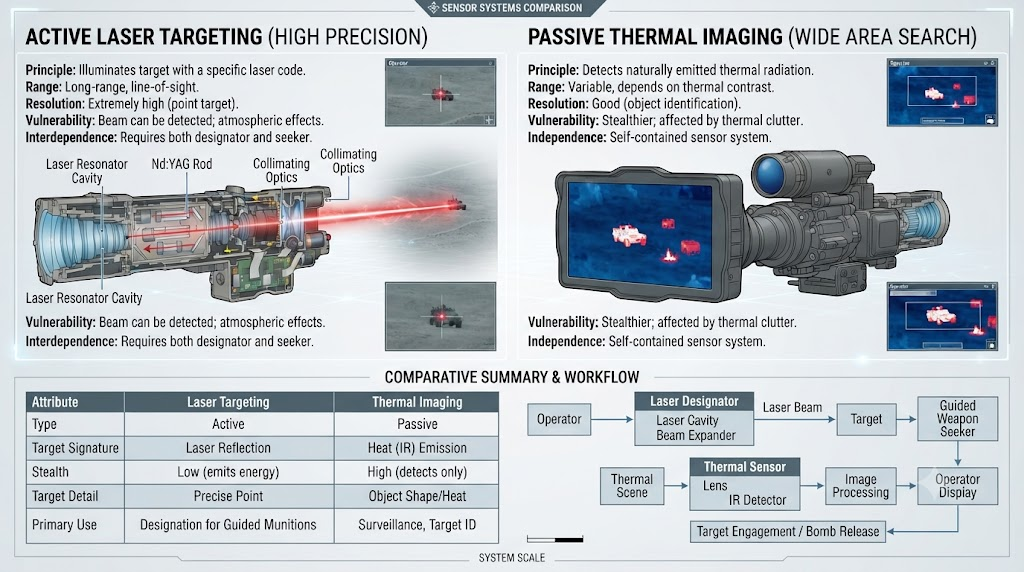
When discussing targeting systems, it’s essential to differentiate between active and passive approaches. While Laser Target Designators are inherently active, understanding their relationship with passive systems highlights the strengths and limitations of each, and how they can be complementary.
Active Laser Designators: Advantages and Limitations
Active LRDs emit their own energy (laser light) to illuminate a target. This provides several distinct advantages:
- Exceptional Precision: The focused laser spot allows for extremely accurate guidance of PGMs directly to the designated point.
- Range: High-power lasers can designate targets at considerable distances, extending the standoff range for both ground and air assets.
- Positive ID: The distinct coded pulse sequence provides a unique signature for guided munitions to home in on, reducing the risk of targeting errors.
However, active systems also have limitations:
- Line-of-Sight Dependent: Obstructions like terrain, buildings, or adverse weather (fog, heavy rain) can block the laser beam.
- Potential for Detection: While IR lasers are invisible to the naked eye, sophisticated adversary sensors can detect laser emissions, potentially revealing the designator’s position (laser vulnerability).
- Power Consumption: Emitting powerful laser pulses requires significant energy, impacting battery life for man-portable systems.
Passive Target Acquisition Systems: Complementary Roles
Passive systems, such as infrared (IR) cameras, electro-optical (EO) sensors, or radar, do not emit their own energy. Instead, they detect energy reflected or emitted by the target or its surroundings.
Their advantages include:
- Stealth: No energy emission means they are harder for adversaries to detect.
- All-Weather Capability (for some): Radar can penetrate conditions that block optical systems. IR sensors can see through smoke and darkness.
- Situational Awareness: Excellent for broad area surveillance and initial target detection.
Passive systems often lack the pinpoint precision for direct weapon guidance that active LRDs provide. They excel at initial target detection and tracking, creating a robust targeting chain when combined with LRDs. This combination enhances mission resilience and offers greater flexibility in diverse operational scenarios.
Verifying LRD Accuracy: Industry Standards and Testing Protocols
The reliability and precision of Laser Target Designators are not assumed; they are rigorously tested and verified. Adherence to strict industry standards and comprehensive testing protocols is fundamental to ensuring these critical devices perform flawlessly in the field.
MIL-STD Compliance and Performance Benchmarks
The US Department of Defense and NATO establish a comprehensive set of military standards (MIL-STD) that govern the design, manufacturing, and performance of defense equipment, including LRDs. These standards cover everything from environmental ruggedness (MIL-STD-810G) to electromagnetic compatibility (MIL-STD-461G) and optical performance.
Compliance ensures interoperability across different platforms and nations, guaranteeing a consistent level of quality and performance. Our products, like those featured on stalaser.com, are engineered to meet or exceed these critical benchmarks, providing the reliability demanded by military operations. (NATO Standardization)
Real-World Testing and Validation
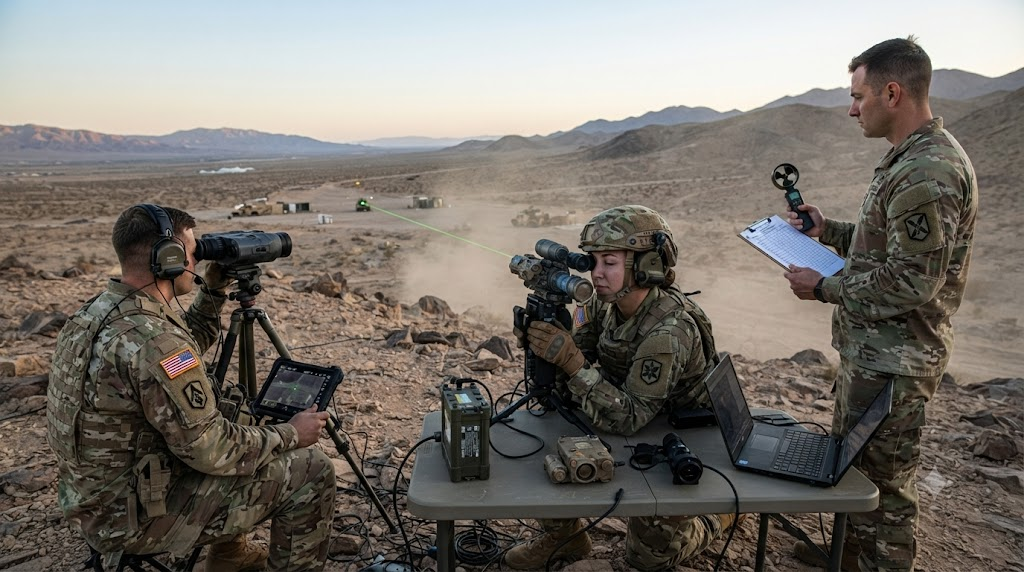
Beyond laboratory certifications, extensive field testing and validation exercises are paramount. Based on our data, LRDs undergo rigorous trials in diverse and challenging operational conditions, simulating real-world battlefield scenarios.
This includes testing accuracy at maximum ranges, evaluating performance under varying atmospheric conditions (fog, dust, heat), and assessing durability against shocks and vibrations. A recent case study from our own validation efforts in a desert environment demonstrated sustained sub-meter accuracy for our next-generation LRDs across multiple days of continuous operation, even with significant temperature fluctuations. This kind of real-world performance is what sets leading solutions apart.
The Horizon of Precision: Future Trends in Target Designation
The landscape of defense technology is constantly evolving, and Laser Target Designators are no exception. Looking towards 2026 and beyond, several key trends are shaping the next generation of precision targeting capabilities.
Miniaturization and Enhanced Portability
The drive for smaller, lighter, and more portable LRD systems continues relentlessly. This trend expands deployment possibilities significantly. We’re seeing systems compact enough for easy integration into a dismounted soldier’s kit, or even micro-UAVs.
This enhanced portability allows for greater tactical flexibility, enabling rapid deployment in confined spaces or by special operations forces where every ounce counts. The goal is to provide advanced precision in a form factor that doesn’t impede operational agility.
Multi-Spectral Capabilities and AI Integration
Future LRDs will likely incorporate multi-spectral sensing, combining visible, infrared, and other spectral bands to improve target recognition and discrimination in complex environments. This sensor fusion approach enhances accuracy and resilience against countermeasures.
The integration of AI in target designation is also rapidly advancing. AI-driven algorithms can automate target acquisition, track multiple targets simultaneously, and even suggest optimal engagement parameters, significantly reducing operator workload and improving decision-making speed. STA Laser is actively investing in these areas for our next generation of Precision Munitions Systems.
Counter-Designator Technologies and Defensive Measures
As LRD technology advances, so too do the methods to counter it. The development of adversary laser threats and counter-designator technologies is a critical area of focus. This includes systems designed to detect, jam, or spoof incoming laser designator beams.
Consequently, future LRDs will integrate advanced anti-jamming capabilities, adaptive waveform technologies, and enhanced encryption to maintain operational effectiveness in contested environments. This ongoing arms race ensures continuous innovation in both offensive and defensive targeting systems.
Frequently Asked Questions about Laser Target Designators
What is the effective range of a typical LRD?
The effective range of an LRD varies significantly based on its power output, optical quality, and atmospheric conditions. Man-portable systems typically range from 5 km to 10 km, while vehicle-mounted or airborne designators can extend to 20 km or more under optimal conditions.
How are LRDs protected against jamming?
Modern LRDs incorporate several anti-jamming measures. These include advanced laser pulse coding, frequency hopping, and signal processing algorithms that can filter out extraneous noise or spoofing attempts. Some systems also employ multi-band or adaptive laser output to enhance resilience.
What training is required to operate an LRD?
Operating an LRD requires specialized training for military personnel. This typically involves classroom instruction on laser physics and safety, extensive simulator training, and practical field exercises. Operators must be proficient in target identification, range estimation, communication protocols, and adherence to rules of engagement.
Can LRDs be used in all weather conditions?
While modern LRDs are designed for environmental ruggedness, extreme weather conditions can impact performance. Heavy fog, thick smoke, or dense rain can attenuate the laser beam, reducing its effective range and accuracy. However, advancements in laser technology and multi-spectral integration are continuously improving all-weather capabilities.
Partnering for Precision: Integrating Advanced LRD Solutions
Achieving tactical superiority hinges on the integration of state-of-the-art targeting capabilities. At STA Laser, we understand the critical role Laser Target Designators play in modern defense strategies.

Custom Solutions for Unique Mission Requirements
Every mission has unique demands. We specialize in developing tailored LRD systems designed to meet your specific and unique requirements. Whether it’s a miniaturized solution for special forces or a high-power designator for a naval platform, our engineering team works directly with you to craft bespoke defense technology.
Consultation and Implementation Services
Integrating new technology can be complex. We offer expert consultation and comprehensive implementation support to ensure seamless integration and optimal performance of your new LRD technologies. Our team provides technical support LRD users can rely on, from initial concept to field deployment.
Elevate Your Mission with STA Laser Precision
Ready to enhance your operational capabilities with industry-leading Laser Target Designators? Our experts are here to help.
1. Explore Our Solutions: Dive deeper into our advanced LRD offerings.
2. Schedule a Consultation: Discuss your specific needs with our technical team.
3. Partner for Precision: Integrate cutting-edge technology into your defense framework.