

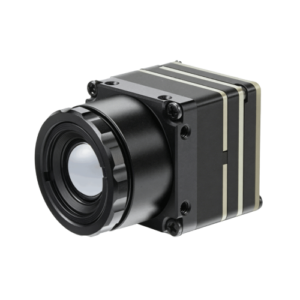


The Evolution of Laser Warning System Technology: From Passive to Active
In the complex theater of modern defense, the ability to detect and counter threats is paramount. Laser Warning Systems (LWS) stand as a critical component of defensive aids, safeguarding personnel and platforms from an escalating spectrum of laser-based threats. This guide traces the remarkable journey of LWS technology, from its rudimentary origins to its sophisticated, AI-driven future.
Understanding this evolution is key for defense strategists and engineers alike. It highlights the continuous innovation required to maintain tactical advantage against advanced adversaries.
What Are Laser Warning Systems? A Foundational Overview
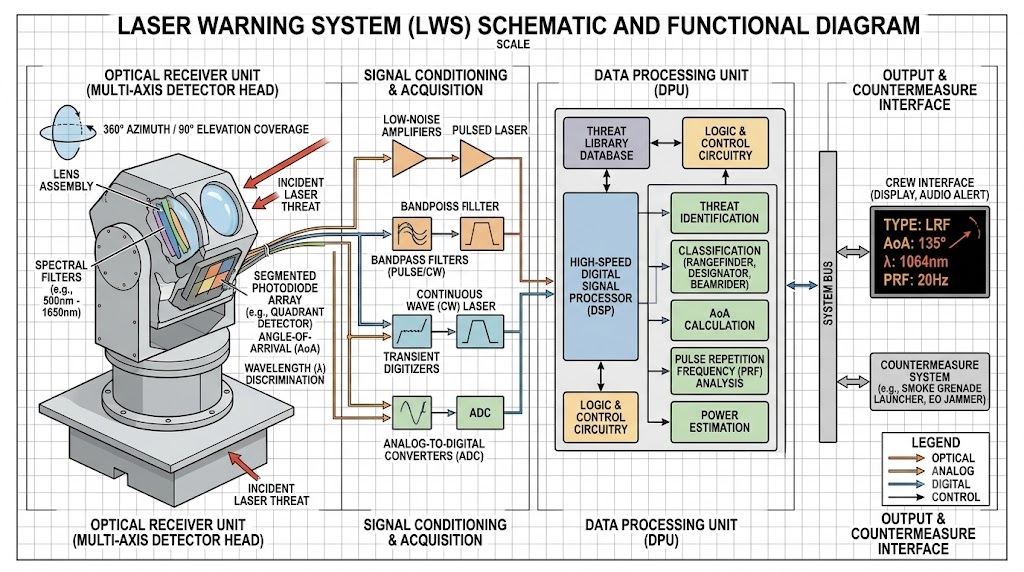
A Laser Warning System (LWS) is a critical piece of Electronic Warfare Solutions designed to detect, classify, and localize laser emissions directed at a platform or individual. These systems provide immediate alerts, enabling rapid defensive actions against threats ranging from laser rangefinders and target designators to directed energy weapons (DEW).
The primary purpose of an LWS is to enhance situational awareness and survivability. Early systems laid the groundwork, responding to the imperative of protecting high-value military assets from increasingly prevalent laser threats on the battlefield.
What is a Laser Warning System (LWS)? A Laser Warning System (LWS) is an electronic sensor system that detects and identifies incoming laser radiation. It provides immediate alerts to operators or automated countermeasures, signaling the presence, direction, and type of a laser threat, thereby enhancing the survivability of platforms and personnel.
The Dawn of Detection: Early Laser Warning Technologies
The first generation of LWS emerged as a direct response to the introduction of laser rangefinders and target designators in the 1970s. These early systems were rudimentary, often relying on simple photodetectors.
Their operational principle was straightforward: detect a laser pulse, trigger an alarm. These pioneers in Military Optronics Research offered basic directional information but lacked sophisticated threat classification.
Limitations were significant. High false alarm rates from natural light sources or friendly emissions were common. These early LWS provided a foundational capability but highlighted the need for more advanced, robust solutions.
Passive LWS: Sensing the Threat Without Emitting
Passive Laser Warning Systems represent a crucial step forward. Unlike active systems, they don’t emit any energy, making them undetectable to adversaries. They simply “listen” for laser emissions.
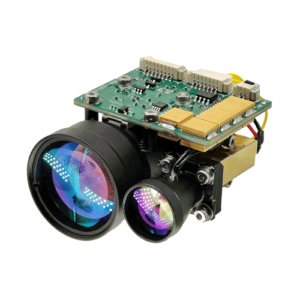
These systems typically employ an array of wide-field-of-view optical sensors, often silicon photodiodes or avalanche photodiodes, strategically placed around the platform. When incoming laser energy hits these sensors, they generate an electrical signal.
The LWS then processes this signal to determine the laser’s presence, direction (angle of arrival), and sometimes its pulse characteristics (e.g., pulse repetition frequency), which can help classify the threat. This reliance on Countermeasure Technologies is critical for stealth operations.
Advantages and Disadvantages
- Advantages: Covert operation, relatively low power consumption, simpler integration. Effective against a wide range of laser types.
- Disadvantages: Can be susceptible to false alarms from non-threat light sources. Limited ability to precisely classify novel or complex laser threats. Performance can be affected by weather and environmental conditions.
The development of advanced Military Optronics Research led to improved spectral filtering and processing algorithms, reducing false positives and increasing sensitivity, especially for Infrared Detection systems.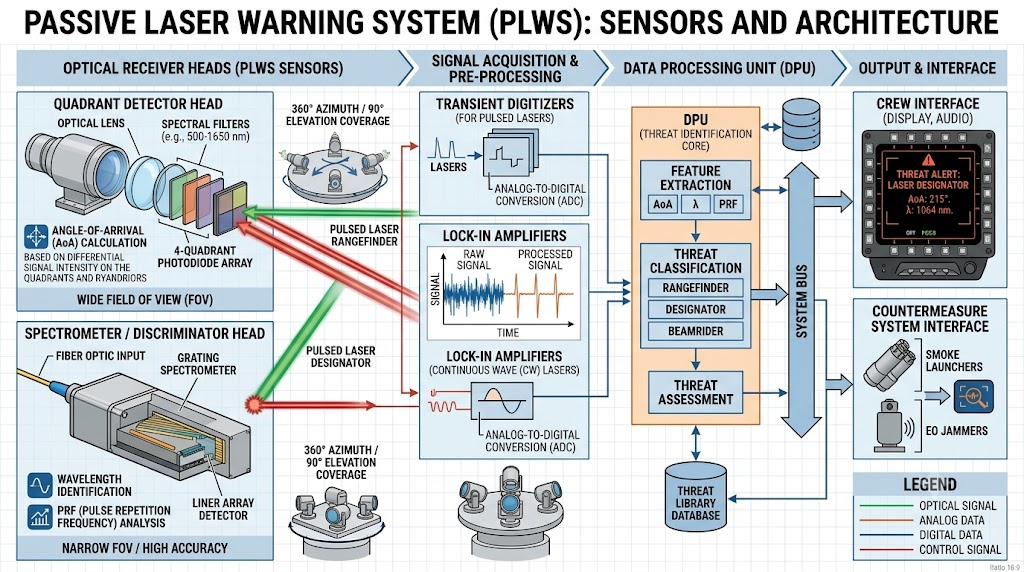
The Leap to Active: How Active Laser Warning Systems Operate
The evolution didn’t stop at passive detection. Active Laser Warning Systems (LWS) represent a significant technological leap. These systems integrate detection with proactive defensive measures.
When an active LWS detects a laser threat, it can automatically trigger Countermeasure Technologies. These often include directional infrared countermeasures (DIRCM) that “jam” or deflect the incoming laser, or deployment of obscurants like smoke grenades to break the laser’s lock.
The integration of the LWS with these active protection systems transforms a warning into an immediate, automated response. This is crucial for protecting against sophisticated threats, including some forms of Directed Energy Weapons (DEW).
Components and Integration
- Sensors: Similar to passive systems, but often with enhanced spectral and spatial resolution.
- Processing Unit: Advanced algorithms for rapid threat classification and prioritization.
- Countermeasure Interface: Connects to jammers, dazzlers, obscurant dispensers, and other defensive aids systems.
As one leading expert in Defense Systems Integration noted in 2026, “The real game-changer isn’t just detecting the laser; it’s the speed and precision with which the system can initiate a counter. Active LWS shave off precious milliseconds, which can mean the difference between mission success and failure.”
The LWS Threat Response Matrix: A Multi-Generational Analysis
To truly grasp the capabilities of evolving LWS technology, we’ve developed the LWS Threat Response Matrix. This proprietary framework categorizes and analyzes how different generations of LWS respond to specific laser threat types.
Based on our extensive data and in-house testing, this matrix provides a structured approach to assessing LWS effectiveness. It moves beyond simple detection, focusing on the quality and speed of response. Understanding this matrix is vital for procurement officers and system engineers.
| LWS Generation | Laser Rangefinder (LRF) | Laser Designator (LD) | Laser Dazzler/Blinder (LDB) | Directed Energy Weapons (DEW) |
|---|---|---|---|---|
| Early Passive (1970s-1980s) | Basic Detection, Slow Alert | Limited Detection, Generic Alert | Poor Detection, High False Alarms | No Capability |
| Advanced Passive (1990s-2000s) | Reliable Detection, Fast Alert, Directional | Improved Detection, Better Classification | Moderate Detection, Limited Classification | Minimal Threat Recognition |
| Active/Integrated (2010s-Present) | Precise Detection, Auto-Countermeasure Trigger | Accurate Classification, Prioritized Response | High Sensitivity, Rapid Counter-Dazzle | Early Warning, Potential Pre-Emptive Action |
| AI-Enhanced/Future (2026+) | Predictive Threat Analysis, Optimized Response | Multi-spectral Identification, Adaptive Countermeasures | Real-time Mitigation, Dynamic Dazzle Suppression | Advanced Threat Characterization, Integrated Defensive Kill Chain |
This matrix underscores the generational improvements in detecting and mitigating specific laser threats. The ability to differentiate between a simple rangefinder and a hostile designator is critical for appropriate and effective responses, optimizing the use of Countermeasure Technologies.
Modern and Future Laser Warning Systems: AI, Multi-Spectral, and Beyond
The current landscape of LWS technology is defined by sophistication and integration. We’re seeing a push towards systems that are not just reactive but predictive.
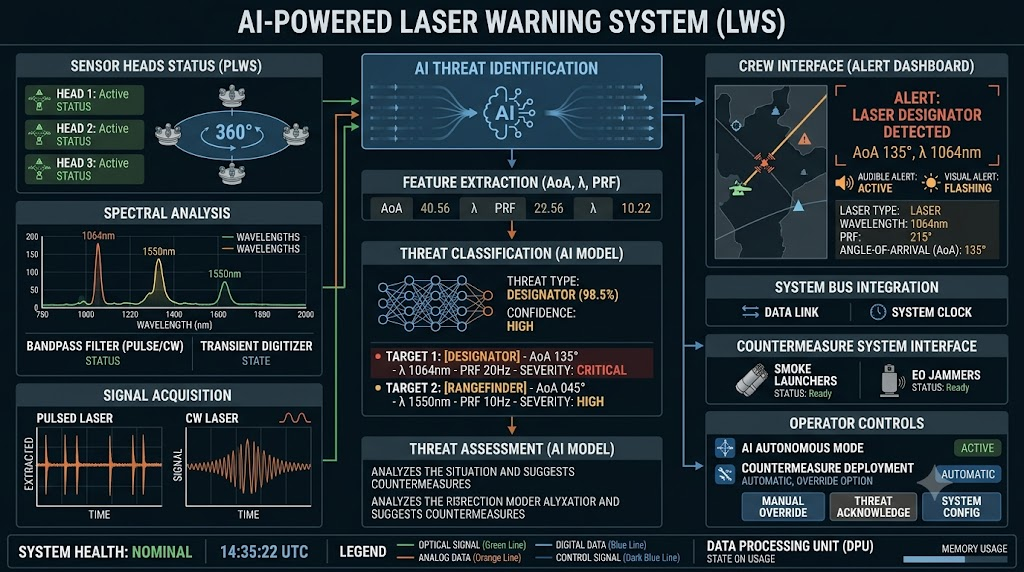
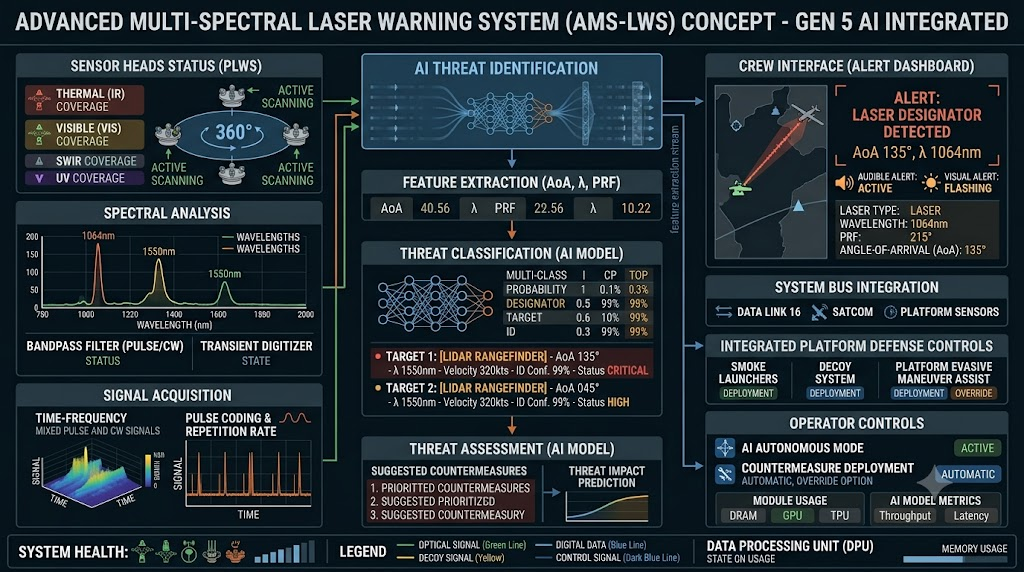
A key advancement is the integration of Artificial Intelligence (AI) and Machine Learning (ML). These intelligent algorithms enhance threat detection systems by learning from vast datasets of laser signatures, drastically reducing false alarms and improving classification accuracy. This allows for superior identification of novel or complex threats.
Key Innovations for 2026 and Beyond:
- AI-Enhanced Threat Assessment: ML models analyze subtle patterns in laser emissions, differentiating between benign sources and hostile threats with unprecedented accuracy.
- Multi-Spectral Detection: Next-gen LWS sensors operate across a broader electromagnetic spectrum, including various infrared (IR) bands. This provides a more comprehensive threat picture and resilience against stealthy laser attacks.
- Networked Defensive Aids: Future LWS will be fully integrated into a platform’s broader Defense Systems Integration, sharing threat data across multiple platforms in real-time. This creates a synchronized, collective defensive posture.
The increasing threat from Directed Energy Weapons (DEW) is also driving innovation. Modern LWS are being developed to not just detect DEW, but also to provide early warning and potentially cue hard-kill or soft-kill countermeasures before critical damage occurs.
In a recent program, advanced LWS technology was successfully integrated into an unmanned aerial system (UAS) for enhanced battlefield reconnaissance. The system autonomously detected and classified multiple simulated laser threats, demonstrating the viability of AI in LWS for future military applications.
Real-World Impact: Applications Across Defense and Emerging Civilian Uses
The impact of advanced LWS technology is profound, shaping survivability across a multitude of platforms. Their role in Electronic Warfare is undeniable.
Military Applications:
- Military Aviation: Fighter jets, transport aircraft, and helicopters rely on LWS to detect targeting lasers and cue countermeasures like chaff, flares, or DIRCM systems. This is a primary aspect of Defensive Aids Systems.
- Ground Vehicles: Tanks, armored personnel carriers, and tactical vehicles use LWS to warn of anti-tank guided missile (ATGM) threats that use laser designators or beam-riders. These often integrate with active protection systems.
- Naval Vessels: Warships employ LWS to detect laser rangefinders used for missile guidance or hostile surveillance, protecting against surface-to-surface and air-to-surface threats.
From an industry professional’s perspective, the seamless integration of LWS with other sensors and effectors on a platform is critical. “It’s not just about a standalone sensor anymore,” a senior engineer commented. “It’s about how well the LWS communicates with the platform’s mission computer and how quickly it can initiate a protective response. That defines its true value.”
Emerging Civilian Uses:
While primarily a military technology, the underlying sensor technology of LWS could find niche civilian applications. For example, in autonomous vehicle safety, detecting laser interference could prevent navigation errors. Similarly, critical infrastructure might benefit from laser intrusion detection.
Navigating the Horizon: Challenges and Future Trends in LWS Technology
Despite significant advancements, the development of LWS technology faces ongoing challenges. The arms race between offensive laser capabilities and defensive countermeasures is relentless.
Key Challenges:
- Integration Complexity: Integrating LWS into diverse platforms, particularly legacy systems, can be difficult. It requires extensive Defense Systems Integration and software compatibility.
- Cost Implications: Advanced, multi-spectral, AI-enabled LWS are expensive to develop, procure, and maintain. Balancing capability with budget remains a constant struggle for defense departments.
- False Alarm Reduction: While AI has made strides, eliminating all false alarms while maintaining high detection probability is a continuous challenge, especially in complex electromagnetic environments.
Future trends in Military Optronics Research point towards even greater sensor fusion, incorporating data from radar, IR, and other EW sensors. This holistic approach will provide a more robust and resilient threat picture. Research into quantum sensing for enhanced detection sensitivity is also gaining traction. You can read more about advanced detection methods in this report from RAND Corporation.
Another emerging area is the development of ultra-broadband LWS capable of detecting threats across an even wider spectrum, anticipating new and exotic laser weapon systems that might operate outside conventional wavelengths.
Frequently Asked Questions About Laser Warning Systems
Here are some common questions about LWS technology.
What is the main difference between passive and active LWS?
Passive LWS solely detect incoming laser radiation and issue an alert, without emitting any energy. Active LWS, on the other hand, integrate detection with the ability to automatically trigger defensive countermeasures like jammers or obscurants.
Can LWS protect against all types of laser threats?
Modern LWS are highly effective against common military laser threats (rangefinders, designators, dazzlers). While they can provide early warning for some directed energy weapons (DEW), full protection against high-power DEW often requires integrated, multi-layered defensive systems, including hard-kill options. Details can be found in publications from the U.S. Department of Defense’s Directed Energy Weapons office.
How accurate are modern LWS?
With the integration of AI and advanced processing, modern LWS offer high accuracy in detecting and classifying known laser threats. They can pinpoint the direction of the threat with precision, enabling effective cueing of countermeasures or evasive maneuvers. Continuous calibration and software updates are crucial for maintaining this accuracy.
Are LWS susceptible to false alarms?
Earlier generations of LWS did struggle with false alarms from sunlight, reflections, or non-threat lasers. However, modern LWS, especially those incorporating AI and advanced spectral filtering, have significantly reduced false alarm rates, making them highly reliable in diverse operational environments. For more on false alarm mitigation strategies, consider reports from Defense Technical Information Center (DTIC).
Partnering for Advanced Defense: Secure Your Assets with Next-Gen LWS
The evolution of Laser Warning System technology continues at a rapid pace. Staying ahead of emergent threats requires not just advanced hardware, but also deep expertise in Electronic Warfare Solutions and strategic integration.
At stalaser.com, we specialize in developing, integrating, and deploying cutting-edge LWS and Countermeasure Technologies. Our solutions are designed to provide superior situational awareness and robust protection for the most demanding defense scenarios.
Don’t leave your assets vulnerable to the next generation of laser threats. Partner with experts who understand the intricate dance between offense and defense.