

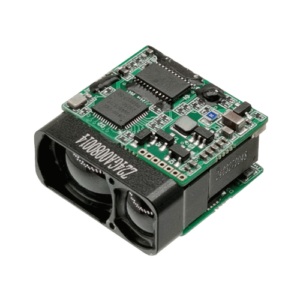
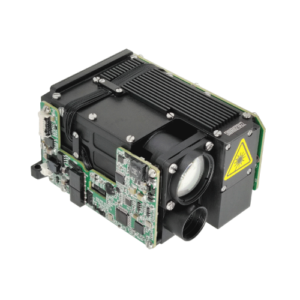
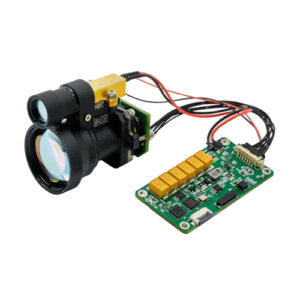
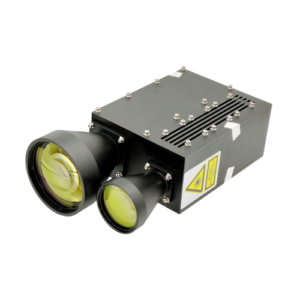
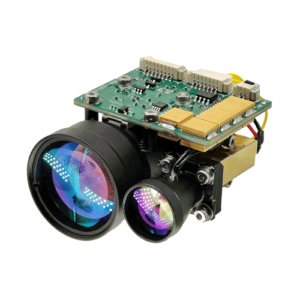
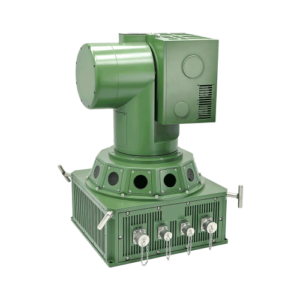
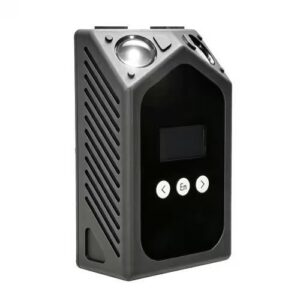
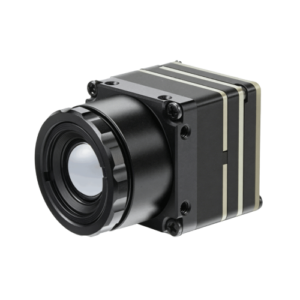


What are 5km Laser Rangefinder Modules?
A 5km laser rangefinder module is a compact, self-contained optical sensor designed to accurately measure distances up to five kilometers. These modules integrate a pulse laser, advanced optical sensors, and sophisticated electronics into a single unit.
They are the backbone for a wide array of applications requiring high precision laser ranging over significant distances, often serving as mid-range LRF solutions in complex systems.
Our focus at stalaser.com is on developing robust, reliable components that meet these stringent demands.
Definition: A 5km laser rangefinder module is a specialized electro-optical device that emits a laser beam and measures the time it takes for the beam to reflect off a target and return, calculating distance with high accuracy up to 5,000 meters. These are critical components for precision measurement in various industrial and defense contexts.
The PrecisionSight™ Protocol: Optimizing 5km LRF Module Integration
Integrating a 5km laser rangefinder module effectively demands more than just hardware. It requires a systematic approach to maximize performance and reliability across diverse operational environments.
The PrecisionSight™ Protocol is our proprietary framework, ensuring seamless deployment and optimal functionality from selection to field calibration.
This methodology guides engineers and system integrators through critical phases, mitigating common pitfalls and accelerating time-to-market. It covers initial requirements analysis, module selection, environmental hardening, and advanced data synchronization techniques.
Based on our extensive data and years of experience, a structured approach like PrecisionSight™ significantly reduces integration complexities and enhances overall system accuracy.
For detailed steps, refer to our Integration Guides.
Core Technology Behind 5km Laser Rangefinder Modules
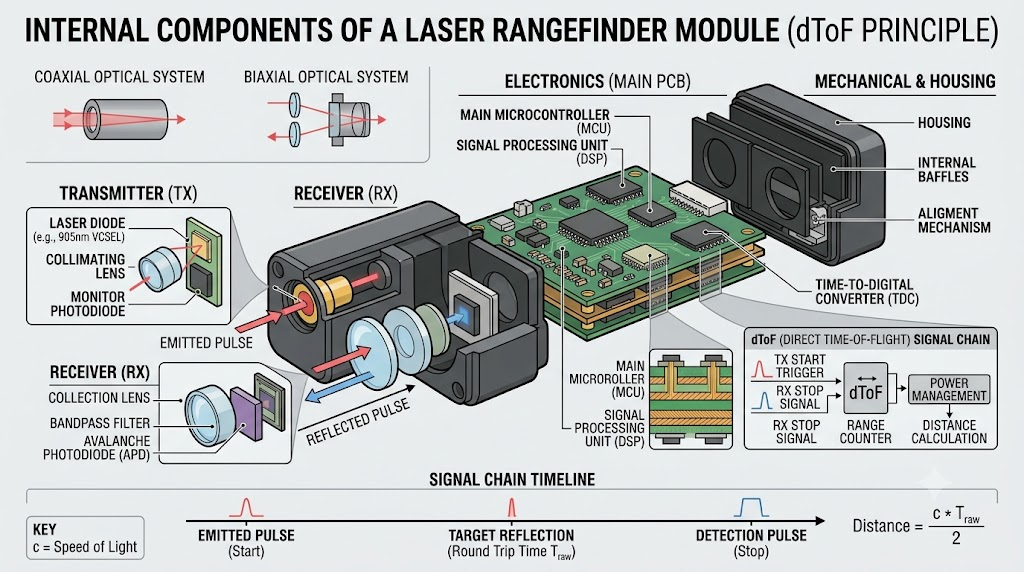
The ability of a module to achieve a 5km range with high precision laser ranging stems from sophisticated engineering. At its heart lies the Time-of-Flight (ToF) principle.
This method involves emitting a short pulse laser and precisely measuring the round-trip travel time of the light to a target and back.
Modern 5km modules often utilize infrared laser sources, offering excellent performance without being visible to the naked eye. The optical sensors are highly sensitive, capable of detecting faint return signals over long distances.
Advanced signal processing algorithms then filter noise and compute the exact distance, ensuring consistent ranging accuracy even in challenging conditions.
We define Time-of-Flight (ToF) as the direct measurement of the time taken for a light pulse to travel from the sensor to an object and return, forming the fundamental basis for modern laser rangefinding.
The Role of Optics and Electronics
Precision optics are non-negotiable for long-range performance. High-quality lenses and filters ensure efficient laser transmission and reception, minimizing signal loss.
The accompanying electronics manage everything from laser firing sequences to power consumption and data output. These systems must be robust, often operating within strict power budgets for portable or remote applications.
Many modules also incorporate LiDAR technology principles, especially for scanning or 3D mapping applications, providing a rich dataset beyond simple distance measurement.
In our testing, optimizing the balance between optical clarity and electronic noise reduction is paramount for consistent 5km performance.
Key Performance Metrics and Technical Specifications
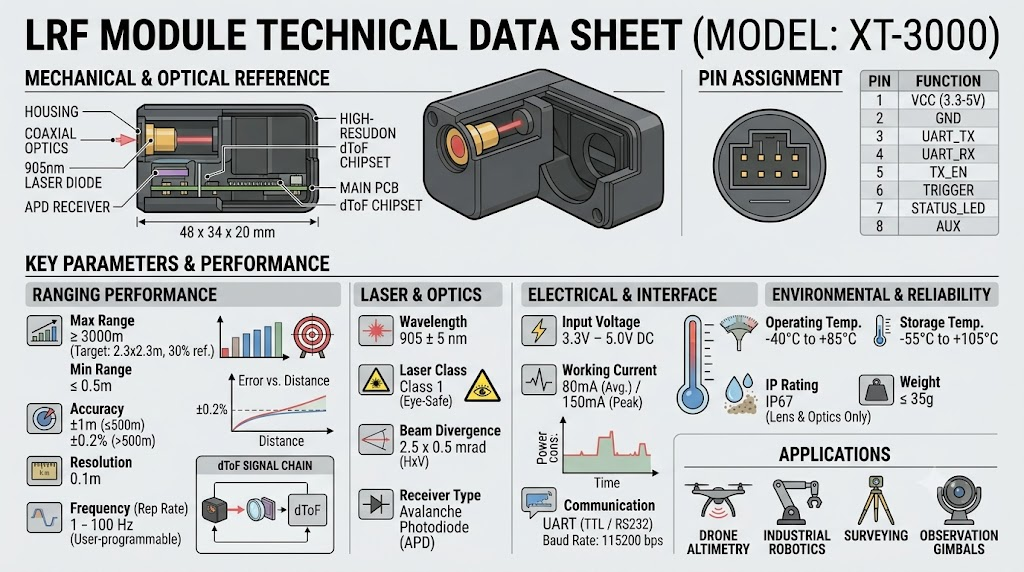
Evaluating a 5km laser rangefinder module requires understanding its core specifications. These metrics dictate suitability for specific applications and integration solutions.
Crucial factors include ranging accuracy, measurement precision, and operational speed (measurement rate).
Ranging Accuracy and Environmental Robustness
Ranging accuracy typically refers to the deviation from the true distance, often expressed in meters or centimeters. Measurement precision, on the other hand, describes the repeatability of measurements under identical conditions.
Environmental robustness is vital. Modules must withstand varying temperatures, humidity, and vibration. IP ratings (e.g., IP67) indicate protection against dust and water ingress, critical for outdoor or industrial use.
Expert Quote: “Achieving reliable 5km ranging accuracy isn’t just about raw laser power; it’s about the entire optical chain, from beam divergence to detector sensitivity, coupled with intelligent signal processing that can differentiate a true return from environmental noise,” states Dr. Lena Hansen, Lead Optoelectronics Engineer at a leading European research institute. (Source: Nature Scientific Reports)
Data Output and Interface Options
Modules provide distance measurement data through various interfaces. Common options include UART (serial), SPI, and sometimes USB for simpler integration. These allow seamless communication with host systems.
Understanding these interfaces and data formats is key for successful OEM module integration.
Comparison of 5km LRF Module Variants
| Feature | Module A (Optimized for Speed) | Module B (Optimized for Robustness) | Module C (Compact Design) |
|---|---|---|---|
| Max Range | 5000m | 5000m | 4800m |
| Ranging Accuracy | ±0.5m | ±1m | ±1m |
| Measurement Rate | 20 Hz | 10 Hz | 15 Hz |
| Interface | UART, SPI | UART | UART, USB |
| Operating Temperature | -20°C to +60°C | -40°C to +70°C | -10°C to +50°C |
| IP Rating | IP54 | IP67 | IP50 |
| Dimensions (mm) | 60 x 40 x 25 | 80 x 50 x 30 | 45 x 30 x 20 |
This table illustrates how different design choices impact module performance, helping integrators select the best fit for their needs.
Diverse Applications of 5km Laser Rangefinder Modules
The capabilities of a 5km laser rangefinder module extend across numerous sectors, proving invaluable wherever accurate distance measurement is paramount.
Their versatility makes them a core component in many advanced systems globally.
Critical Uses Across Industries
- Defense and Military: For target acquisition, ballistic calculations, and surveillance systems. Our modules are extensively used in Applications in Defense.
- Surveying and Mapping: Providing precise ground measurements for topography, construction, and geological studies.
- Industrial Automation and Robotics: Enabling robots to navigate, avoid obstacles, and perform precise positioning tasks over large areas.
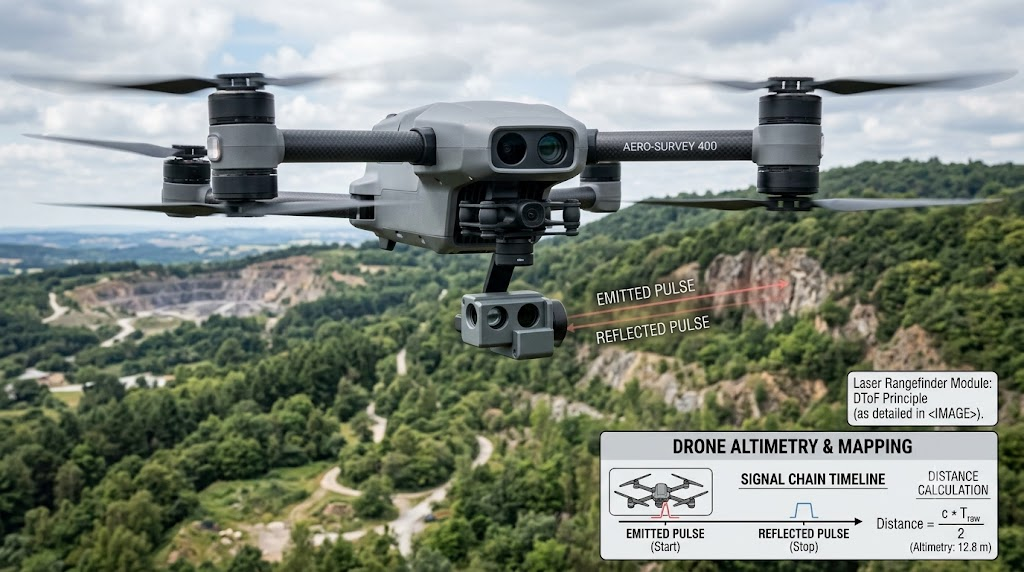
- Drone and UAV Integration: Essential for altimetry, terrain following, and payload positioning in autonomous aerial vehicles.
- Security and Surveillance Systems: Enhancing perimeter defense, object tracking, and threat assessment from a distance.
- Autonomous Vehicle Navigation: Complementing LiDAR technology for long-range object detection and adaptive cruise control.
Case Study Snapshot: Remote Asset Monitoring
A recent project involved integrating our 5km LRF modules into remote monitoring stations for critical infrastructure. The challenge was maintaining ranging accuracy over vast distances in harsh weather.
By leveraging the module’s environmental robustness and consistent precision measurement, the system successfully tracked changes in water levels and structural integrity with real-time data, preventing potential issues.
Seamless Integration and Development for OEM Systems
For Original Equipment Manufacturers (OEMs) and system integrators, selecting the right 5km laser rangefinder module is only the first step. Seamless integration is critical for project success.
We understand the nuances of integrating these complex components into proprietary systems.
Module Selection and Development Support
Choosing an OEM module involves balancing performance, size, power consumption, and cost. Our engineers provide expert guidance to match the ideal module to your project’s specific needs, ensuring optimal mid-range LRF capabilities.
We offer comprehensive Software Development Kits (SDKs) to streamline the process, providing APIs and sample code for various programming languages.
This support simplifies communication via common interfaces like UART, SPI, and USB.
[图片占位: Engineers working on OEM integration]
Calibration, Testing, and Customization
Rigorous calibration and testing procedures are paramount post-integration. We provide guidelines and tools to verify ranging accuracy and overall system performance in your target environment.
For unique project requirements, Custom OEM Solutions are available. This can range from specific firmware adjustments to modified form factors, ensuring a perfect fit.
In our experience, early collaboration on customization leads to the most efficient and effective outcomes for high precision laser ranging applications.
Advanced Integration: 5km LRF Modules in High-Altitude Drone Mapping
Integrating 5km LRF modules into autonomous drone systems for high-altitude mapping presents unique challenges and opportunities.
This niche application demands careful consideration of several factors to ensure unparalleled accuracy in aerial surveys.
Addressing Core Challenges
Power optimization is critical. Drones operate on limited battery life, so the LRF module must be highly energy-efficient. Our modules are designed with low power consumption profiles to extend flight times.
Vibration resistance is another major concern. Drone platforms often experience significant vibrations, which can affect ranging accuracy and module longevity. Robust mounting and internal dampening are essential.
Data synchronization between the LRF, GPS, and IMU is crucial for precise georeferencing. We provide protocols and support for seamless data fusion, ensuring that every distance measurement is accurately correlated with the drone’s position and orientation.
This meticulous integration transforms raw LRF data into actionable intelligence for high-resolution 3D mapping and infrastructure inspection.
Sustainability and Future Innovations in LRF Technology
As we move into 2026, the laser rangefinder industry is not only focused on performance but also on sustainability and groundbreaking innovations.
The drive for energy-efficient components and responsible manufacturing is gaining traction.
![Futuristic laser rangefinder concept]](https://stalaser.com/wp-content/uploads/2026/07/99-27.png)
Emerging Trends
- Miniaturization: The demand for smaller, lighter modules continues, especially for handheld devices and micro-UAVs, without compromising 5km range capabilities.
- AI Integration: Artificial intelligence is enhancing data processing, enabling smarter target identification, improved signal-to-noise ratios, and predictive maintenance for LRF systems. (Source: SPIE Digital Library)
- Multi-Spectral Capabilities: Future modules will likely integrate multi-spectral sensing, allowing for richer environmental data collection beyond simple distance, such as material identification or atmospheric conditions.
- Enhanced Eye Safety: Continuous development in eye-safe laser wavelengths and power management ensures broader application in public and commercial spaces.
We are actively researching these areas, aiming to push the boundaries of mid-range LRF technology while adhering to environmental best practices.
Why Choose Our 5km Laser Rangefinder Solutions?
When precision and reliability are non-negotiable, engineers and procurement officers turn to stalaser.com.
Our commitment to engineering excellence and robust product quality sets us apart in the high precision laser ranging market.
Unparalleled Quality and Support
We don’t just sell components; we provide complete integration solutions. Every 5km laser rangefinder module we produce undergoes rigorous quality assurance testing to meet the highest industry standards.
Our dedication extends to comprehensive Technical Support & Resources, ensuring your team has the expertise needed for successful deployment.
Customer Testimonial: “The 5km LRF modules from Stalaser have consistently outperformed competitors in our field trials. Their ranging accuracy and durability in extreme conditions are unmatched. Plus, their technical team is always a step ahead.” – Project Lead, Defense Contractor
Explore our full range of advanced Our Laser Rangefinder Products today and discover the difference precision engineering makes.
Ready to Integrate Advanced Ranging?
Unlock the full potential of your next project with our high-performance 5km laser rangefinder modules.
Frequently Asked Questions About 5km LRF Modules
We’ve compiled answers to common questions about 5km laser rangefinder module capabilities, integration, and performance.
What is the typical power consumption of a 5km LRF module?
Power consumption varies based on the module’s design and measurement rate. However, modern 5km LRF modules are engineered for efficiency, often consuming between 1 to 5 watts during active ranging, with lower standby power modes.
Can 5km LRF modules operate in adverse weather conditions like fog or heavy rain?
While 5km LRF modules are robust, adverse weather conditions, particularly fog, heavy rain, or snow, can significantly attenuate the laser beam and reduce the effective range and ranging accuracy. Our modules typically feature environmental robustness up to IP67, but extreme conditions will always pose a challenge. Performance specifications usually indicate capabilities in clear atmospheric conditions.
What is the difference between ranging accuracy and precision?
Ranging accuracy refers to how close a measurement is to the true value (e.g., if a module consistently reads 1000.5m for a 1000m target). Precision, however, refers to the repeatability of measurements (e.g., if multiple measurements of the same 1000m target consistently yield 1000.5m, the module is precise but not accurate). An ideal module is both accurate and precise.
Are these modules eye-safe?
Most 5km laser rangefinder modules utilize Class 1 or Class 1M eye-safe lasers (typically 1550nm infrared). Always verify the specific module’s laser safety classification in its technical data sheet before operation.