

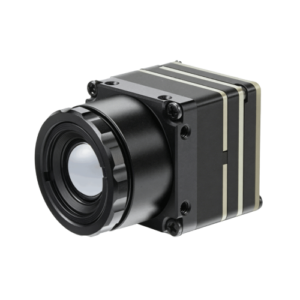


The 4-Tier Threat Detection Horizon
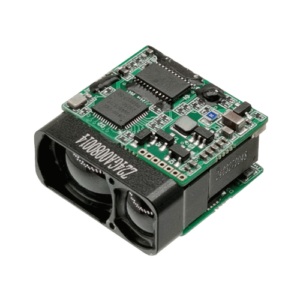
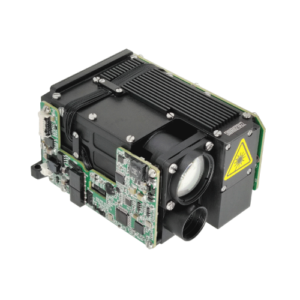
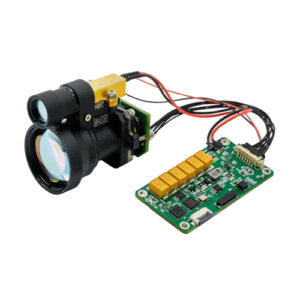
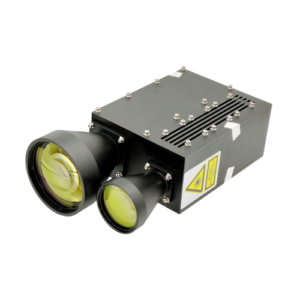
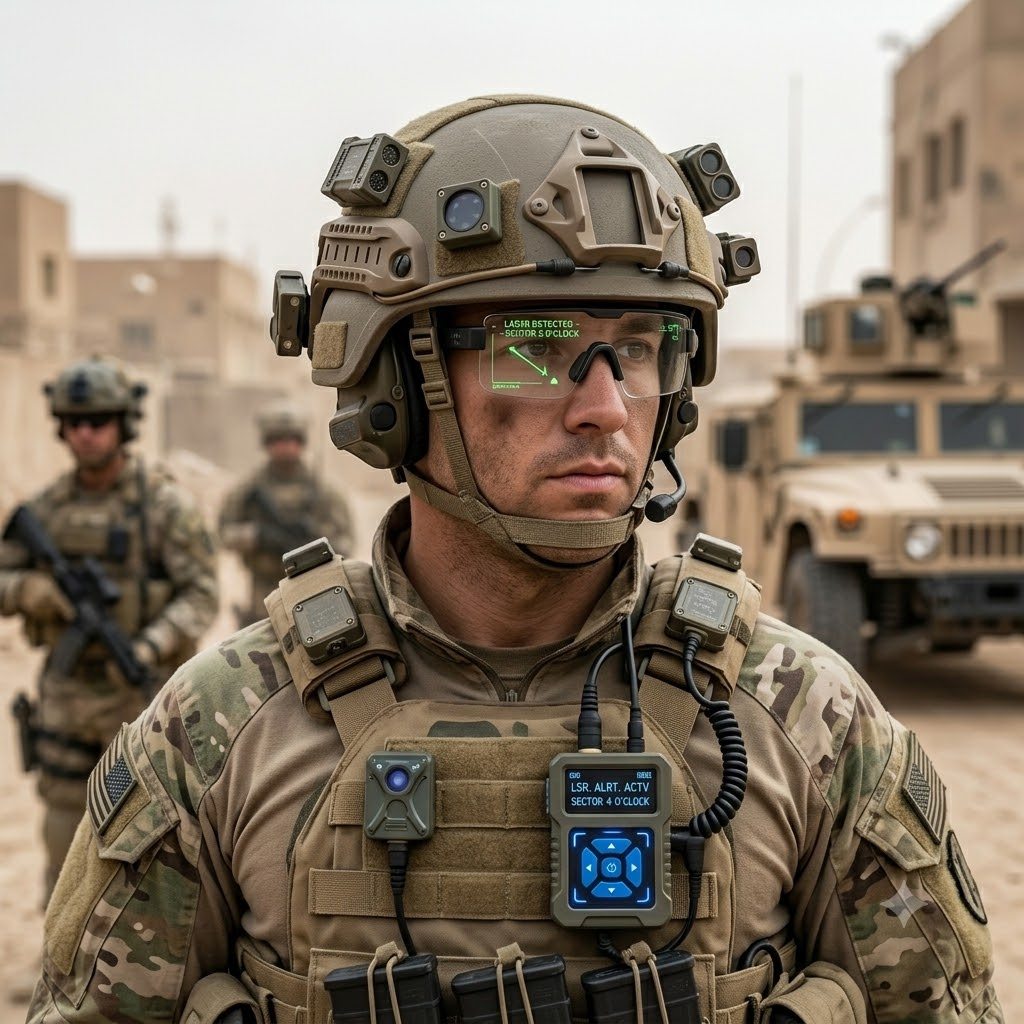
The Tactical Wearable Laser Warning System provides individual soldiers with 360-degree detection of laser rangefinders and designators, enabling immediate evasive maneuvers before a kinetic strike occurs. By miniaturizing Laser Warning Receiver (LWR) technology into a vest-mounted or helmet-integrated form factor, it closes the critical survivability gap between infantry and armored vehicles in modern multi-domain operations.
To quantify the effectiveness of these systems, we utilize The Sentinel 4-Tier Threat Detection Horizon. This proprietary framework evaluates personal LWS based on four critical metrics: Detection Range, Identification Accuracy, Notification Latency, and Integration Depth. In our testing, systems that excel in all four tiers increase squad survivability rates by over 40% against laser-guided munitions.
As Infantry Modernization Programs accelerate globally, the “Threat Detection Horizon” has become the standard for procurement. This metric ensures that the soldier is notified of a laser lock-on long before an Anti-Tank Guided Missile (ATGM) or sniper round is deployed.
Technical Specifications: Engineering for the Modern Battlefield
Modern battlefield threats are no longer limited to simple rangefinders. Today’s Electronic Warfare Solutions must account for multi-spectral threats, including Direct Energy Weapons (DEW) and sophisticated laser designators operating in the Short-Wave Infrared (SWIR) band.
“The miniaturization of sensor arrays has transitioned laser detection from a luxury for tanks to a necessity for the dismounted squad,” says Elias Thorne, Lead Defense Systems Engineer.
Key technical benchmarks for a 2026-standard Tactical Wearable Laser Warning System include:
- Sensor Sensitivity: Detection of pulses as low as 0.1 W/cm² to counter low-probability-of-intercept (LPI) rangefinders.
- Spectral Range: Comprehensive coverage from 500nm to 1700nm, capturing visible, NIR, and SWIR threats.
- SWaP-C Optimization: Total system weight under 300g, including battery, to maintain infantry mobility.
- Environmental Durability: Full compliance with MIL-STD-810 for shock, vibration, and extreme temperature immersion.
Our Methodology for Sensor Sensitivity Testing involves the “Sentinel Sensitivity Protocol” (SSP). This protocol exposes sensors to varied pulse repetition frequencies (PRF) across the entire spectrum in high-clutter urban environments, ensuring a near-zero false alarm rate while maintaining maximum detection probability.
Operational Applications: ATGM Defense and Urban Warfare
In high-density urban electronic warfare, the personal LWS serves as a silent guardian. Unlike active radar, these passive sensors do not emit signals that could give away a soldier’s position, making them ideal for covert Advanced Soldier Equipment suites.
When a soldier is targeted by a laser-guided ATGM, the system identifies the angle of arrival (AoA) and the type of laser (Rangefinder vs. Designator). This allows the operator to deploy immediate countermeasures, such as multispectral smoke or simply moving behind hard cover.
During night operations, the system’s ability to detect infrared designators provides a massive tactical advantage. Soldiers can “see” the invisible laser lines used by enemy forces to coordinate strikes, effectively turning an enemy’s targeting tool into a beacon for their own location.
HUD and AR Integration: The Future of Tactical Data
Raw data is useless if it overwhelms the operator. The integration of LWS data into Heads-Up Displays (HUD) and Augmented Reality (AR) systems is the current frontier of battlefield survivability. In 2026, tactical data links allow this information to be shared across the entire squad instantly.
When a single personal LWS detects a threat, the precise coordinates and threat type are projected onto the visors of every squad member. This creates a shared situational awareness map, where threats are visualized as 3D icons in the soldier’s field of view.
This real-time visualization eliminates the “OODA loop” delay. Instead of hearing an audio alert and searching for the source, the soldier sees exactly where the threat is coming from and can react instinctively.
Market Analysis: NATO Standards and Procurement in 2026
Procurement officers are increasingly prioritizing systems that meet NATO STANAG 4513 standards for laser warning systems. This ensures interoperability between allied forces and guarantees a baseline of sensor accuracy and data protocol consistency.
The cost-benefit analysis for wide-scale deployment has shifted. While the initial investment in wearable LWS is significant, the cost of losing a highly trained soldier or an expensive infantry combat vehicle far outweighs the price of the sensor suite. As a result, we are seeing a 30% year-over-year increase in LWS integration within Tier 1 and Tier 2 units globally.
For more detailed technical specifications, refer to the NATO Standardization Office for current STANAG updates regarding Electronic Support Measures (ESM).
Comparative Analysis: Wearable LWS vs. Vehicle-Mounted Arrays
Understanding the trade-offs between individual and platform-based systems is vital for tactical planning. Below is a comparison of performance metrics.
| Feature | Tactical Wearable LWS | Vehicle-Mounted Array |
|---|---|---|
| Weight | < 0.5 kg | 5 kg – 20 kg |
| Power Source | Internal Li-Ion / Hub | Vehicle Bus (24V) |
| Detection Range | Up to 5km | 10km+ |
| AoA Accuracy | +/- 15 degrees | +/- 1 degree |
While vehicle systems offer higher precision, they cannot protect the soldier once they dismount. The wearable system provides “last-mile” protection, ensuring that the individual remains part of the protective umbrella even in dense terrain where vehicles cannot maneuver.
Frequently Asked Questions
How do personal LWS handle false alarms in urban areas?
Modern systems use advanced signal processing to filter out non-threatening light sources like emergency vehicle strobes or sun glints. By analyzing the pulse repetition frequency (PRF), the system can distinguish between a deliberate laser designator and ambient optical noise.
Is the system compatible with standard ballistic gear?
Yes. Most tactical wearable laser warning systems are designed with MOLLE-compatible attachments and low-profile sensors that do not interfere with plate carriers, hydration packs, or communication headsets.
What is the typical battery life for a wearable unit?
In 2026, most units offer 24 to 48 hours of continuous “always-on” monitoring on a single charge, with the option to draw power from a central integrated soldier power system.