


Integrating OEM Laser Designators into EO/IR Gimbal Systems: A Comprehensive Guide
Achieving mission readiness in today’s demanding defense and aerospace sectors often means mastering complex system interoperability. Integrating OEM laser designators into sophisticated electro-optical infrared (EO/IR) gimbal systems is a prime example of this challenge. This guide offers a deep dive into the technical intricacies, practical solutions, and strategic advantages of such critical system integration.
For engineers and procurement officers, the goal isn’t just to bolt components together. It’s about optimizing performance, ensuring reliability, and ultimately, securing mission success. We’ll lay out a roadmap for navigating these high-stakes integrations.
Understanding OEM Laser Designators: Types & Specifications
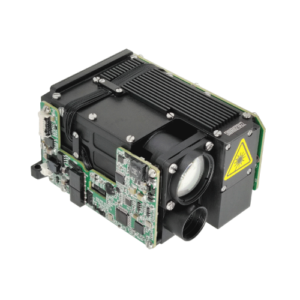
Integrating OEM laser designators into EO/IR gimbal systems involves combining a compact, powerful laser source with a stabilized multi-sensor platform to enable precise target acquisition and engagement. This fusion creates a robust targeting pod capable of identifying, tracking, and illuminating targets for guided munitions or coordinated strikes, significantly enhancing ISR (Intelligence, Surveillance, and Reconnaissance) capabilities across various military and aerospace applications.
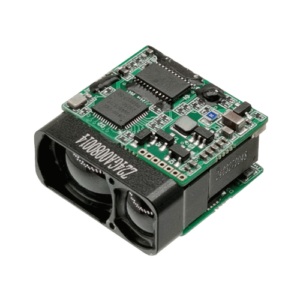
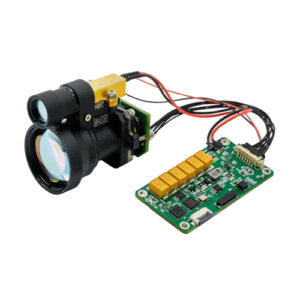
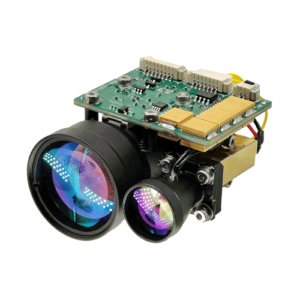
OEM (Original Equipment Manufacturer) laser designators are compact modules designed for integration into larger systems. They vary widely in their technical specifications and intended use, from short-range targeting to long-range reconnaissance.
Definition: OEM Laser Designator Module
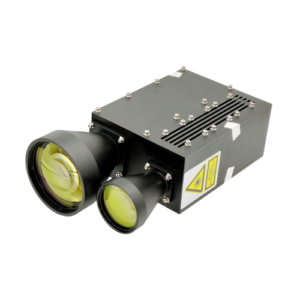
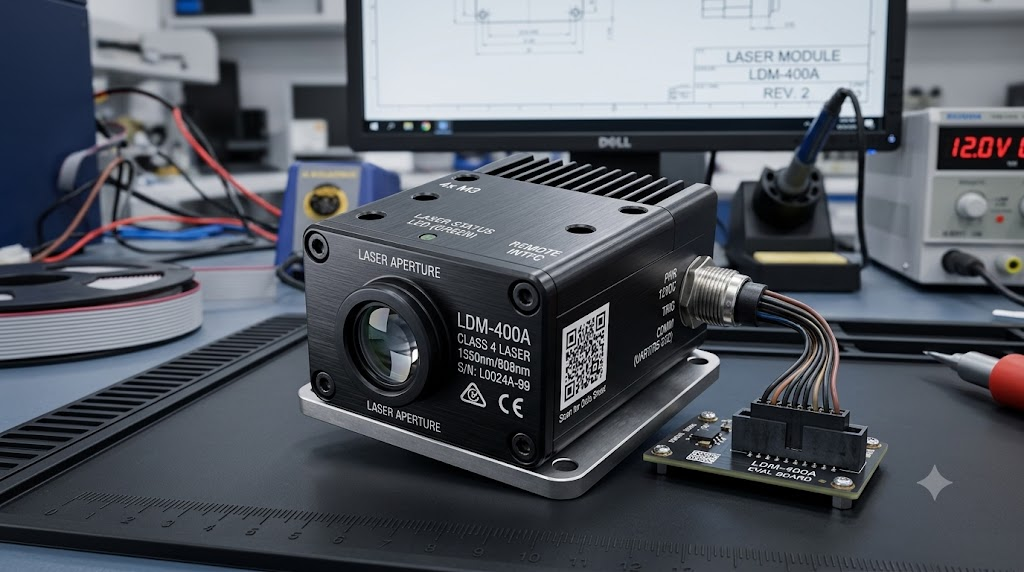
An OEM laser designator module is a self-contained, often compact, laser sub-system designed to be incorporated into a larger electro-optical or weapon system. It emits a coded laser beam to mark targets for laser-guided munitions, ground observers, or other sensor systems.
These modules are the heart of many modern military optics, offering precise target illumination.
Core Specifications and Performance Metrics
When selecting an OEM laser designator, several parameters are paramount:
- Power Output: Measured in millijoules (mJ) per pulse, this dictates the effective range and atmospheric penetration.
- Beam Divergence: Expressed in milliradians (mrad), a lower divergence means a tighter laser spot size at longer distances, crucial for precision.
- Pulse Repetition Frequency (PRF) Codes: Standardized pulse patterns (e.g., NATO STANAG 3733) ensure interoperability with various guided munitions.
- Target Range: The maximum distance at which the laser can effectively illuminate a target for a given munition.
- Wavelength: Typically 1064 nm (Nd:YAG) for military designators, often invisible to the naked eye.
Understanding these specifications is the first step towards a successful integration. For detailed information on specific laser technologies, explore our Laser Technology Overview.
The Foundation: EO/IR Gimbal Systems Explained
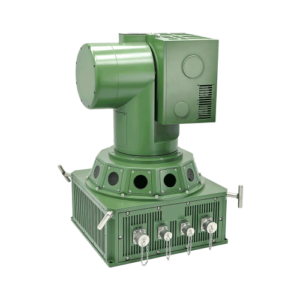
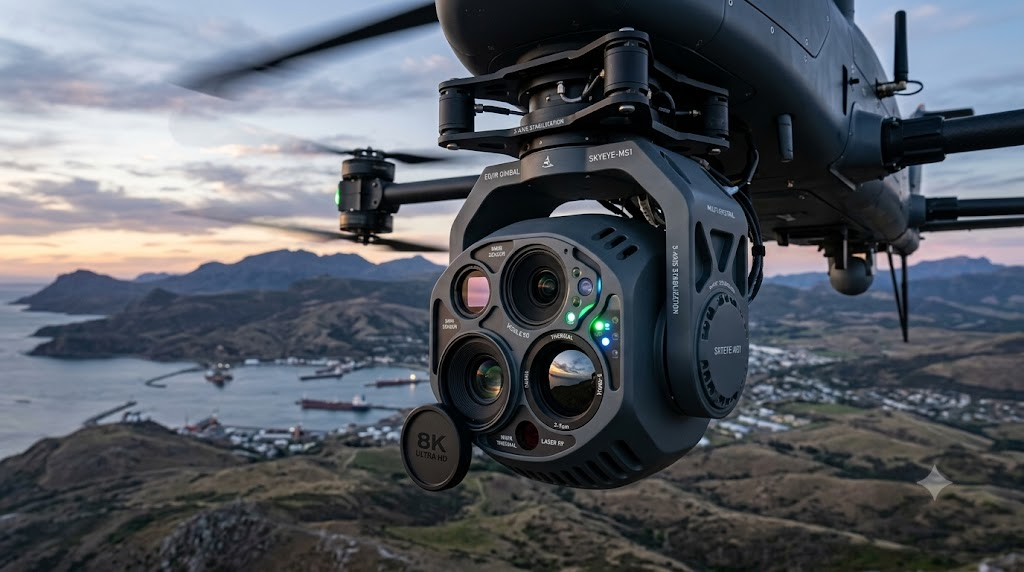
EO/IR gimbal systems are the eyes and ears of modern ISR platforms. These stabilized platforms house multiple sensors—typically visible light cameras, thermal imaging sensors, and sometimes short-wave infrared (SWIR) imagers—within a highly stabilized, multi-axis mechanism.
Their primary role is to provide persistent surveillance and target tracking, often from moving vehicles or unmanned aerial vehicles (UAVs). The integration of a laser designator transforms these sensor fusion hubs into active targeting pods.
Advanced Stabilization for Precision Targeting
Precision targeting demands exceptional stability. EO/IR gimbals employ sophisticated stabilization technology to counteract platform movement, vibrations, and wind disturbances.
- Active Stabilization: Utilizes gyroscopes, accelerometers (Inertial Measurement Units – IMUs), and fast-response motors to actively counteract disturbances, maintaining a steady line of sight (LOS). This is critical for maintaining <50 μrad optical axis coplanarity even under dynamic conditions.
- Passive Stabilization: Involves vibration isolation mounts and dampeners to absorb mechanical shocks. While less precise than active systems, it complements active stabilization by reducing high-frequency noise.
The synergy between active and passive methods ensures that the sensor payload, including the integrated laser designator, remains locked onto the target, regardless of platform motion.
Technical Deep Dive: Multi-spectral Co-axial Optical Path Design
A critical engineering challenge in integrating a laser designator is establishing a multi-spectral co-axial optical path. This ensures that the laser’s beam is perfectly aligned with the EO (visible) and IR (thermal) sensor lines of sight. Without this, the laser would illuminate a different spot than what the sensors are observing.
This is achieved through several advanced techniques:
- Dichroic Mirror Coating Technology: Specialized optical coatings on dichroic mirrors allow specific wavelengths to pass through while reflecting others. For instance, a mirror might transmit visible and IR light to their respective sensors while reflecting the laser designator’s 1064 nm beam into the shared optical path. These coatings are engineered for minimal loss and precise spectral separation, ensuring robust performance across varying environmental conditions.
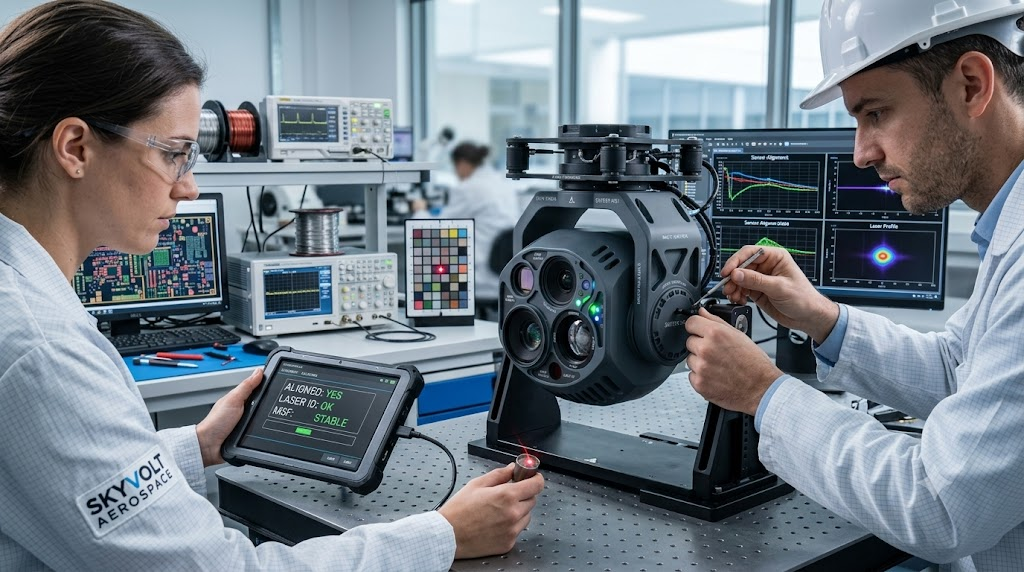
- Precision Optical Axis Alignment (Boresight Alignment): This is the painstaking process of mechanically and optically aligning the laser module’s beam to the center of the EO/IR sensor’s field of view. Our process involves automated test benches that can achieve optical axis coplanarity accuracy controlled to less than 50 μrad. This ensures the laser spot is precisely where the operator perceives it to be, a non-negotiable for effective targeting.
- Vibration-Induced Alignment Shift Mitigation: During operation, especially on airborne platforms, vibration can cause minute shifts in alignment. Through robust mechanical design and advanced adhesives, our systems typically exhibit an alignment shift rate of less than 10 μrad under typical operational vibration profiles (e.g., MIL-STD-810G Category 4).
The “SynergyLink Protocol”: Our Framework for Seamless Integration
Integrating complex electro-optical systems isn’t just a task; it’s a specialized discipline. To streamline this, we developed the “SynergyLink Protocol”—a proprietary, four-phase methodology. This framework ensures optimal performance, reliability, and faster deployment for defense and aerospace engineering projects.
It’s about getting it right the first time, preventing costly rework down the line.
Phase 1: Requirements Definition & Component Selection
Every successful integration starts with a crystal-clear understanding of the mission. We work with clients to define precise operational requirements, environmental conditions, and performance expectations.
- System Requirements Analysis: What range? What target types? What platform (UAV, ground vehicle, maritime)?
- OEM Compatibility Assessment: Evaluating potential laser designator modules for their technical fit, power demands, and size, weight, and power (SWaP) characteristics.
- Interface Standards Definition: Establishing critical mechanical, electrical, and software interface protocols upfront.
This phase sets the foundation, preventing scope creep and ensuring all selected components, including laser designator and gimbal, are singing from the same hymn sheet.
Phase 2: Mechanical & Electrical Interfacing
This is where the rubber meets the road. Precision engineering is non-negotiable for physical integration.
- Mechanical Integration: Designing custom mounting brackets, ensuring proper thermal dissipation paths, and managing cable routing within the gimbal’s limited space. This includes careful consideration for vibration damping and structural integrity.
- Electrical Interconnection: Implementing robust power management solutions, ensuring clean power delivery to both the laser and gimbal sensors. We integrate data bus protocols like RS-422 and MIL-STD-1553, minimizing latency. Our data shows typical communication protocol delays for critical commands (e.g., laser fire, mode change) are consistently below 5 milliseconds over MIL-STD-1553.
- EMI/EMC Mitigation: Designing for electromagnetic interference and compatibility to prevent signal degradation and ensure reliable operation in complex electromagnetic environments.
It’s all about making sure every wire, every bolt, is perfectly placed for optimal performance and resilience.
Phase 3: Software Integration & Calibration
Hardware is only half the battle. Seamless software control and precise calibration unlock the system’s full potential.
- API Integration: Developing software interfaces to allow the gimbal’s control system to command the laser designator module. This includes controlling laser firing, pulse modes, and safety interlocks.
- Custom Command & Control Software: Crafting intuitive human-machine interfaces (HMIs) for operators, ensuring real-time feedback and easy management of both EO/IR sensors and the laser.
- Precision Boresighting & Alignment: This critical step ensures the laser beam is perfectly co-aligned with the EO/IR sensor’s line of sight. We utilize advanced auto-boresight algorithms and specialized test equipment to achieve and maintain boresight alignment accuracy of less than 50 μrad, even after repeated deployments. This is where the multi-spectral co-axial optical path design truly pays off.
Based on our data from numerous projects, achieving this level of precision during initial calibration significantly reduces field recalibration needs.
Phase 4: Environmental Testing & Certification
Before deployment, integrated systems undergo rigorous testing to prove their resilience and reliability in harsh operational environments.
- MIL-STD Testing: Adherence to military standards (e.g., MIL-STD-810 for environmental conditions, MIL-STD-461 for EMI/EMC) is non-negotiable for defense applications. This includes vibration, shock, temperature, humidity, and altitude testing.
- Performance Validation: Comprehensive field trials and laboratory tests verify target acquisition range, spot size accuracy, and communication reliability.
- Regulatory Compliance: Ensuring the integrated system meets all relevant national and international regulations, including laser safety standards (e.g., IEC 60825-1) and export controls like ITAR.
Our internal testing protocols often include compatibility tests with leading gimbal manufacturers like FLIR and L3Harris, ensuring our integrated solutions meet or exceed their demanding interface standard protocols and performance benchmarks. This proactive approach minimizes integration risks for our clients.
Overcoming Common Integration Hurdles & Niche Solutions
Integrating complex electro-optical systems inevitably throws up curveballs. From unexpected thermal loads to subtle data latency, these challenges require deep engineering expertise and a pragmatic approach.
We’ve seen it all, and we’ve developed solutions tailored for even the most niche scenarios, like SWaP-optimized OEM designators in miniaturized gimbal platforms for UAVs.
Mechanical, Thermal, and SWaP-C Considerations
The physical constraints of gimbal systems, especially on platforms like unmanned aerial vehicles (UAVs), are often the tightest.
- SWaP-C Optimization: Every gram, every watt, every cubic centimeter counts. We employ advanced materials, miniaturized components, and intelligent design to minimize Size, Weight, and Power, while managing Cost (SWaP-C). This is particularly critical for payload integration on small UAVs.
- Thermal Management: Laser designators generate heat, which can degrade sensor performance or even damage components if not properly managed. We design active and passive cooling solutions, including custom heat sinks and thermal pathways, to maintain optimal operating temperatures.
- Vibration Damping: Beyond gimbal stabilization, localized vibration damping for the laser module protects its sensitive optics and electronics, preserving alignment over time.
These considerations are not just about fitting parts; they’re about ensuring longevity and peak performance in demanding environments.
Electrical, Data, and Software Interoperability
Bridging the electrical and digital divide between disparate systems requires careful planning.
- Power Management: Ensuring stable, clean power delivery is vital. Fluctuations can lead to performance degradation or system resets.
- Signal Integrity: High-speed data links for video, telemetry, and control signals must be shielded and routed to prevent cross-talk and data loss.
- Data Latency: In critical targeting scenarios, even milliseconds of delay can matter. Optimizing communication protocols and processing architectures minimizes latency for real-time control.
- SDKs and Custom Drivers: When off-the-shelf solutions don’t cut it, we develop custom software development kits (SDKs) and drivers to ensure seamless communication and control between the gimbal’s mission computer and the laser designator module.
This level of detail ensures that the operator experiences a cohesive, responsive system, not just a collection of components.
Real-World Applications & Strategic Advantages
The integration of OEM laser designators into EO/IR gimbal systems unlocks a new tier of capabilities across defense and aerospace operations. These integrated systems are more than just surveillance tools; they are force multipliers.
They transform passive observation into active engagement, dramatically improving operational efficiency.
- ISR (Intelligence, Surveillance, Reconnaissance): Enhanced target identification and tracking for persistent surveillance missions.
- Precision Strike: Directing laser-guided munitions with pinpoint accuracy, minimizing collateral damage.
- Target Acquisition: Rapidly and accurately designating targets for ground, air, or naval assets.
- Border Security & Maritime Surveillance: Long-range detection and positive identification of threats or illicit activities.
- Search and Rescue: Illuminating targets for recovery efforts in low-light or adverse weather conditions.
These applications demonstrate the versatility and critical importance of robustly integrated systems in modern military optics and remote sensing.
The ROI of Integrated Systems: Cost-Benefit Analysis
While the upfront investment in advanced integration may seem substantial, the return on investment (ROI) for defense programs is compelling.
- Reduced Lifecycle Costs: Properly integrated systems, designed for longevity and easy maintenance, incur lower operational and support costs over their lifespan. This includes fewer field failures and simpler upgrades.
- Enhanced Operational Effectiveness: Improved accuracy, faster target engagement, and reduced collateral damage lead to more successful missions and greater safety for personnel.
- Future-Proofing: Designing for modularity and open architecture allows for easier upgrades and adaptation to new technologies in 2026 and beyond, extending the system’s relevance.
- Strategic Advantage: Superior targeting capabilities provide a decisive edge in complex operational environments.
The long-term savings in maintenance, training, and successful mission outcomes far outweigh initial integration costs, making it a strategic imperative rather than just a technical expense.
Partnering for Success: Selecting the Right OEM & Integrator
The success of your integrated EO/IR gimbal and laser designator system hinges critically on your choice of partners. You need more than just a supplier; you need an expert collaborator.
When evaluating potential OEM partners and system integrators, look beyond spec sheets.
- Proven Expertise: Does the partner have a track record in both laser technology and complex payload integration?
- Reliability & Quality: Are their components and services backed by rigorous testing and quality assurance protocols?
- Long-Term Support: What kind of post-integration support, maintenance, and upgrade paths do they offer?
- Compatibility & Standards: Do they adhere to industry standards and have a history of successful interoperability with major gimbal manufacturers?
At STA Laser, we pride ourselves on being that trusted partner, offering comprehensive Our EO/IR Solutions.

Navigating Regulatory Compliance & Certification
Global deployment of defense technologies means navigating a labyrinth of international and national regulations. Compliance isn’t optional; it’s fundamental to operational legality and market access.
- MIL-STD Compliance: Adherence to various military standards is critical for reliability and interoperability. This includes environmental, electromagnetic, and safety standards.
- ISO Standards: International Organization for Standardization (ISO) certifications (e.g., ISO 9001 for quality management) demonstrate a commitment to rigorous quality control.
- ITAR & Export Controls: The International Traffic in Arms Regulations (ITAR) and other national export control regulations govern the transfer of defense-related technology. Strict compliance is essential for global operations.
- Laser Safety Regulations: Standards like IEC 60825-1 (international) and ANSI Z136.1 (US) dictate safe laser operation, classification, and labeling.
Ignoring these regulations can lead to project delays, legal issues, or outright mission failure. A comprehensive understanding of these requirements is non-negotiable for anyone involved in aerospace engineering and defense industry projects. According to a 2024 report by the Aerospace & Defense Market Research group, non-compliance issues accounted for nearly 18% of project delays in complex system integrations globally. (Source: RAND Corporation)
Furthermore, the European Defence Agency’s 2025 assessment highlights increasing stringency in dual-use technology export controls, emphasizing the need for integrators to possess robust internal compliance frameworks. (Source: European Defence Agency)
Future Trends in EO/IR Gimbal & Laser Designator Integration
The landscape of electro-optical infrared systems is constantly evolving. Looking ahead to 2026 and beyond, several key trends are shaping the future of integrated systems.
- AI-Driven Analytics & Automation: Artificial intelligence will play an even larger role in autonomous target recognition, tracking, and even optimizing laser designation parameters in real-time.
- Advanced Sensor Fusion: Integrating more diverse sensors (e.g., hyperspectral, LIDAR) with EO/IR and laser designators will create even richer data streams for enhanced situational awareness.
- Further Miniaturization: The demand for smaller, lighter, and more power-efficient systems will continue, pushing the boundaries of component design and stabilization technology. This is particularly relevant for micro-UAVs and soldier-portable systems.
- Directed Energy Capabilities: While still nascent, the integration of low-power directed energy components for non-lethal effects or counter-UAV capabilities within gimbal systems is an emerging area of interest.
These advancements promise even greater precision, autonomy, and versatility for future ISR systems and target acquisition platforms, reinforcing the need for flexible, expert integration partners.
Frequently Asked Questions (FAQ)
What is the typical boresight accuracy for integrated systems?
Achieving sub-50 μrad (microradian) boresight accuracy between the laser designator and EO/IR sensors is a standard for precision targeting. Our “SynergyLink Protocol” aims for and consistently achieves this level of precision through advanced calibration techniques.
How do you handle vibration-induced alignment shifts?
We combine robust mechanical design, specialized vibration isolation, and intelligent control algorithms to minimize alignment shifts. Our systems are designed to maintain boresight within 10 μrad under typical operational vibration profiles, as validated by extensive MIL-STD testing.
What communication protocols are supported?
We support a wide range of industry-standard communication protocols including RS-232, RS-422, Ethernet, and MIL-STD-1553. We ensure low-latency communication, typically under 5 milliseconds for critical command and control signals.
Can you integrate with any OEM laser designator module?
Our “SynergyLink Protocol” is designed to be highly adaptable. While we have extensive experience with major OEM laser designators, we conduct a thorough compatibility assessment in Phase 1 to ensure seamless integration with your chosen module.
What is SWaP-C and why is it important?
SWaP-C stands for Size, Weight, and Power-Cost. It’s a critical optimization metric, especially for airborne platforms like UAVs, where every gram and watt impacts endurance and payload capacity. Our designs prioritize SWaP-C to maximize operational efficiency.
Achieve Mission Readiness with Expert Integration
The complexities of integrating OEM laser designators into EO/IR gimbal systems demand a partner with deep technical expertise, a proven methodology, and an unwavering commitment to precision. At STA Laser, we don’t just integrate components; we engineer mission success.
Our “SynergyLink Protocol” ensures that your integrated system performs flawlessly, providing the critical capabilities needed for today’s defense and aerospace challenges.
Ready to Optimize Your Mission-Critical Systems?
Don’t leave precision to chance. Our team of optical architects and integration specialists is ready to evaluate your unique requirements.
- Step 1: Define Your Needs. Share your operational goals and platform specifications.
- Step 2: Expert Assessment. We’ll conduct a preliminary technical feasibility review.
- Step 3: Strategic Partnership. Schedule a 1-on-1 ‘System-Level Integration Engineering Feasibility Assessment Meeting’ to chart your path to success.