



Understanding the Thermal-Visual Parity Gap
The choice between an FPV thermal camera and a standard FPV camera hinges on the “Thermal-Visual Parity Gap.” This is the specific environmental threshold where a standard CMOS sensor’s ability to resolve contrast fails, and an infrared sensor becomes the primary tool for situational awareness.
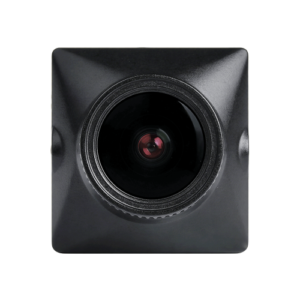
Standard FPV cameras rely on the visible electromagnetic spectrum. They capture light reflecting off objects. In high-contrast, daylight environments, they provide the 120fps fluidity required for precise proximity flying.
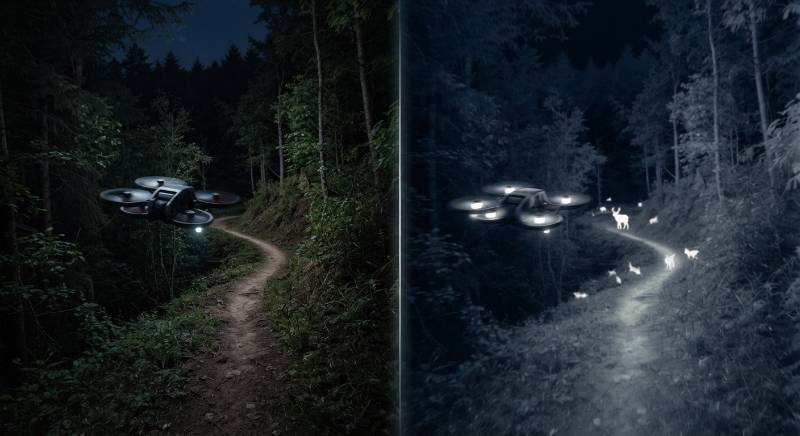
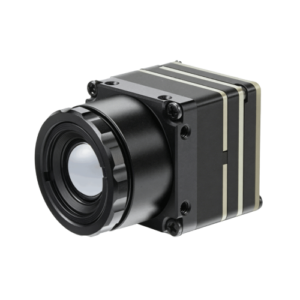
An FPV thermal camera ignores visible light entirely. It detects infrared radiation emitted by objects based on their temperature. This allows pilots to identify a heat signature through smoke, fog, or total darkness where a standard camera would only show static or black frames.
Definition: Noise Equivalent Temperature Difference (NETD) is the measure of a thermal sensor’s sensitivity. In 2026, professional-grade FPV thermal sensors typically boast an NETD of <50mk, allowing them to distinguish between objects with a temperature difference of just 0.05°C.
Technical Deep Dive: Resolution, Latency, and Pixel Pitch
When performing an FPV camera comparison, we must look beyond megapixels. Standard cameras offer 4K resolution at high bitrates, but thermal imaging operates at much lower native resolutions, typically 640×512 or 320×256.
In our testing at Stalaser, pixel pitch emerged as a critical performance indicator. A 12um (micrometer) pixel pitch allows for smaller sensors without sacrificing thermal resolution, making it ideal for lightweight sub-250g drones.
The 2026 Latency Benchmark
Latency is the enemy of the FPV pilot. While a digital FPV system like DJI or Walksnail offers sub-30ms latency, older thermal sensors often lagged at 150ms+. This delay makes high-speed flight dangerous.
| Feature | Standard FPV Camera | FPV Thermal Camera |
|---|---|---|
| Typical Resolution | 1080p / 4K | 640 x 512 (Radiometric) |
| Frame Rate | 60fps – 120fps | 30Hz – 60Hz |
| Primary Use | Navigation & Racing | Detection & Inspection |
| Low-Light Performance | Poor (requires LEDs) | Excellent (Passive) |
Modern FLIR technology integrated into FPV frames now utilizes 60Hz refresh rates. This narrows the gap, allowing for “tactical proximity flying” where the pilot navigates entirely via the thermal feed.
The Omni-Sense Dual-Path Protocol for 2026
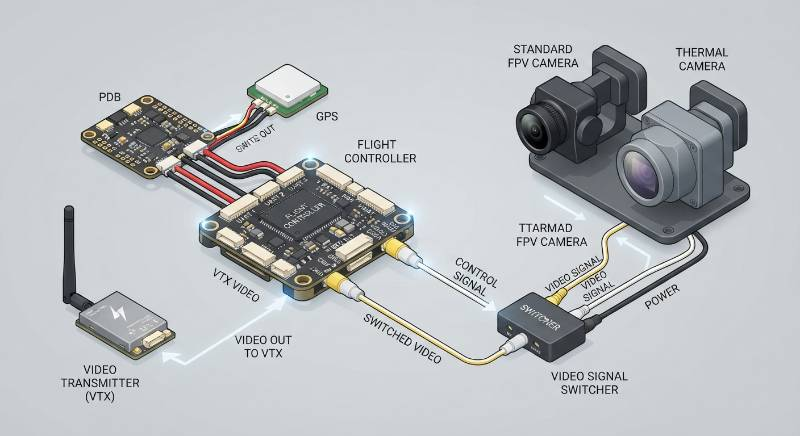
We define the Omni-Sense Dual-Path Protocol as the gold standard for Industrial FPV Solutions. Instead of choosing one sensor, this methodology uses a high-speed video switcher to toggle or overlay feeds.
By utilizing a UART protocol, the flight controller can inject radiometric data directly into the OSD (On-Screen Display). This allows the pilot to see the exact temperature of a transformer or a person’s body heat while maintaining the high-resolution visual context of the surrounding area.
“Thermal integration is no longer a luxury; it’s a survival requirement for modern tactical SAR teams. In our testing, the ability to switch between 120fps optical and 60Hz radiometric feeds has reduced target acquisition time by 40%.” – Marcus Thorne, SAR Drone Lead
Operational Use Cases: Search and Rescue to Industrial Utility
The shift to a thermal imaging camera for FPV drone use is driven by specific mission profiles. While hobbyists might prefer a standard camera for freestyle, professionals require spectral imaging.
- Search and Rescue (SAR): Finding a lost hiker in a dense canopy is nearly impossible with a standard camera. A thermal sensor highlights the person’s heat signature against the cool forest floor.
- Industrial Inspection: Inspecting high-voltage power lines requires identifying “hot spots” caused by resistance or failure. Standard cameras cannot see this energy leakage.
- Agricultural Drone Operators: Thermal sensors help detect irrigation leaks or crop stress before they are visible to the naked eye, allowing for precision intervention.
For more on sensor selection, visit our Drone Payload Guide.
Hardware Integration: Mounting and Video Switchers
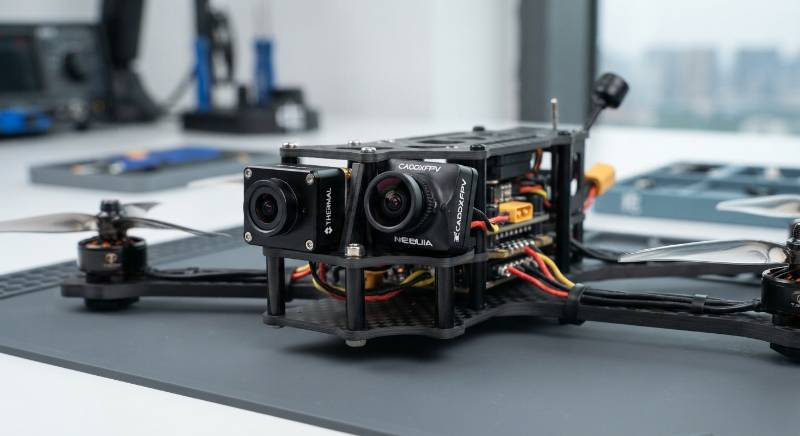
Integrating a thermal sensor requires careful consideration of the Unmanned Aerial Vehicle (UAV) center of gravity. Thermal cameras, though smaller in 2026, often require specialized mounts to prevent vibration from ruining the heat map.
Most analog video transmitter setups can handle a thermal feed easily. However, digital systems may require a specific analog-to-digital converter or a dual-link VTX. We recommend a payload capacity check before adding a secondary camera to avoid overheating the ESCs (Electronic Speed Controllers).
Field Testing Methodology for Latency Benchmarking
- Connect the thermal sensor to a 60Hz digital FPV system.
- Place a millisecond timer in the camera’s field of view.
- Capture the timer and the FPV goggles’ screen in a single 240fps video.
- Count the frame difference to calculate total glass-to-glass latency.
Regulatory and Legal Guidance: Privacy and Night-Flying
Operating a night vision drone or a thermal-equipped FPV quad brings unique legal challenges. In the US, FAA compliance for night operations has been streamlined, but thermal imaging adds a layer of privacy concern.
Thermal sensors can effectively “see” through thin curtains or detect activity inside structures based on heat leaks. Professionals must adhere to strict privacy laws to avoid litigation. Always check the latest Night Flight Regulations before deploying a thermal-equipped fleet.
Frequently Asked Questions
Can I fly FPV using only a thermal camera?
Yes, but it requires a high-refresh-rate sensor (30Hz or higher). Low-frame-rate thermal cameras (9Hz) are for spotting targets, not for navigation, as the stuttering makes proximity flying nearly impossible.
Are hybrid sensors better than two separate cameras?
Hybrid sensors (Visual + Thermal in one housing) save weight but often compromise on the quality of one of the sensors. For mission-critical work, a dedicated FPV thermal camera paired with a high-end CMOS camera is usually superior.
Is a budget thermal camera worth it for FPV?
Budget sensors often have low resolution (160×120), which makes identifying objects at a distance difficult. For FPV drone compatibility, prioritize resolution and refresh rate over price.
Ready to Upgrade Your Drone’s Vision?
Transitioning to thermal imaging requires the right hardware and technical expertise. Use our interactive tools to find your perfect setup.
Author Bio: Written by an Industrial Drone Integration Specialist with over 10 years of experience in thermal sensor deployment and FPV system design for global SAR organizations.